- English
- 한국어
- Português
- русский
- Français
- 日本語
- Deutsch
- tiếng Việt
- Italiano
- Nederlands
- ภาษาไทย
- Polski
- Svenska
- magyar
- Malay
- বাংলা ভাষার
- Dansk
- Suomi
- हिन्दी
- Pilipino
- Türkçe
- Gaeilge
- العربية
- Indonesia
- Norsk
- تمل
- český
- ελληνικά
- український
- Javanese
- فارسی
- தமிழ்
- తెలుగు
- नेपाली
- Burmese
- български
- ລາວ
- Latine
- Қазақша
- Euskal
- Azərbaycan
- Slovenský jazyk
- Македонски
- Lietuvos
- Eesti Keel
- Română
- Slovenski
- मराठी
- Srpski језик
- Español

Why Does Socket & Plug Automatic Assembly Equipment Matter for Stable, Scalable Production?
Article Summary
Socket and plug manufacturing looks simple from the outside, but the reality is full of pressure points: tight dimensional tolerances, fast-changing order volumes, labor inconsistency, missed parts, unstable cycle times, and rising quality complaints. This article explains how Socket & Plug Automatic Assembly Equipment helps manufacturers reduce these risks in a practical way. It breaks down where production bottlenecks usually come from, what features truly matter in equipment selection, how automation affects labor, yield, traceability, and long-term cost control, and why a properly engineered solution can make day-to-day production easier instead of more complicated. It also outlines what buyers should ask before investing and how a reliable partner such as Zhejiang Desheng Intelligent Equipment Tech. Co., Ltd. can support a more dependable manufacturing process.
Contents
- Outline
- What Pain Points Usually Slow Socket and Plug Production
- Why Manual and Semi-Automatic Processes Become a Hidden Cost
- What Good Socket & Plug Automatic Assembly Equipment Should Actually Deliver
- Which Production Results Change Most After Automation
- How Should Buyers Evaluate a Machine Before Making a Decision
- Why Does the Equipment Supplier Matter as Much as the Machine
- FAQ
- Contact Us
Outline
- The real production pressures behind sockets and plugs
- The limits of manual assembly when output and consistency both matter
- The functional value of Socket & Plug Automatic Assembly Equipment
- The production indicators buyers should focus on
- The key questions to ask before purchasing
- The role of supplier experience, customization, and support
- Common buyer questions answered clearly
What Pain Points Usually Slow Socket and Plug Production
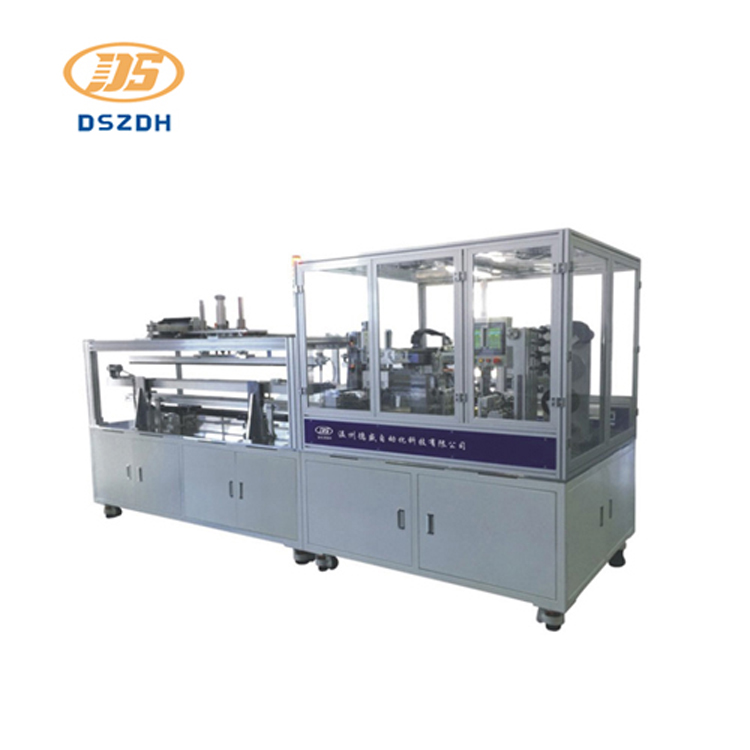
Anyone who has spent time on a socket or plug production floor knows the problem is rarely just “assembly speed.” The bigger issue is that several small inefficiencies stack on top of each other until output becomes unstable. One operator misses a component orientation. Another line slows down when parts feeding becomes inconsistent. A batch passes initial assembly but fails electrical or mechanical checks later. Then the team has to stop, sort, rework, and explain why delivery is behind schedule again.
This is exactly where Socket & Plug Automatic Assembly Equipment becomes important. It is not only about replacing hands with machines. It is about building a process that behaves the same way hour after hour, shift after shift, and order after order. When a product includes multiple small components, contact points, housings, pins, screws, or insert parts, consistency matters just as much as speed.
In many factories, the most common pain points include:
- Frequent assembly variation caused by operator fatigue or skill differences
- Material feeding interruptions that create stop-and-go production
- Difficulty keeping defect rates under control during volume increases
- Rework caused by improper positioning, missing parts, or loose fitting
- Rising labor costs without a matching rise in output
- Poor process visibility when customers ask about quality consistency
These issues hurt more than daily efficiency. They affect customer trust, shipment planning, and pricing power. When a production line cannot deliver stable quality at scale, the commercial impact shows up quickly.
Practical takeaway: If your line is spending too much time correcting assembly errors instead of preventing them, the issue is not just labor management. It is usually a process design problem.
Why Manual and Semi-Automatic Processes Become a Hidden Cost
Some manufacturers delay automation because manual or semi-automatic methods still appear manageable. On paper, they look flexible. In practice, they often become expensive in ways that are easy to underestimate. Training takes time. Staff turnover interrupts performance. Product changeovers rely heavily on individual experience. Output planning becomes difficult because actual cycle times drift throughout the day.
The hidden cost is not only payroll. It is the total cost of unpredictability. If a factory promises large-volume supply but depends on labor-heavy assembly, every surge order becomes stressful. Quality leaders end up chasing inspection issues. Production managers spend their time solving repeat problems. Sales teams become cautious about lead times. A process that looks “good enough” during a normal week can become fragile when demand increases.
Well-designed Socket & Plug Automatic Assembly Equipment addresses this by standardizing critical actions such as feeding, positioning, pressing, inserting, fastening, and inspection. That standardization reduces human variation at the points where defects are most likely to begin. It also improves planning, because the line behavior becomes measurable and repeatable.
| Production Issue | Manual or Semi-Automatic Reality | Automation-Oriented Improvement |
|---|---|---|
| Cycle time stability | Varies by shift, operator, and fatigue level | More repeatable rhythm and easier line balancing |
| Assembly accuracy | Prone to missed steps, orientation errors, or inconsistent force | Controlled motion and programmed sequences reduce variation |
| Labor dependence | High dependence on operator experience and attendance | Lower labor intensity on core assembly operations |
| Defect control | Often detected after assembly is completed | Better integration of in-process checks and rejection logic |
| Scaling output | Requires more training and more operators | Higher throughput potential with more consistent quality behavior |
What Good Socket & Plug Automatic Assembly Equipment Should Actually Deliver
Buyers sometimes focus too much on headline speed and not enough on whether the equipment will perform reliably in real production. A machine can look impressive during a demonstration and still create headaches later if feeding is unstable, changeover is cumbersome, or maintenance access is poor.
Good Socket & Plug Automatic Assembly Equipment should deliver more than motion. It should create a dependable production framework. That means the machine needs to match your product structure, required output, tolerance expectations, and inspection logic. It should also fit the way your plant actually works, including operator interaction, maintenance capability, and future product expansion.
Buyers should pay close attention to whether the equipment offers:
- Stable parts feeding so small components arrive in the correct orientation and timing
- Accurate positioning and insertion for parts that require repeatable mechanical alignment
- Integrated process checks to identify missing parts, improper fit, or assembly deviations early
- Reasonable changeover support if multiple socket or plug variants are involved
- Maintainable machine structure so servicing does not become disruptive or overly specialized
- Customization ability when standard equipment does not match the actual product geometry or sequence
This is one reason many buyers look for suppliers with hands-on experience in non-standard automation and product-specific line development. Zhejiang Desheng Intelligent Equipment Tech. Co., Ltd. is known in this field for providing automation solutions for electrical components and related assembly applications, including socket and plug production equipment, with a strong emphasis on customization and practical manufacturing use cases.
A serious supplier understands that no two assembly lines are exactly the same. Even within the same product family, material differences, dimensional tolerances, part handling characteristics, and customer standards can change the right machine design.
Which Production Results Change Most After Automation
When a factory moves from labor-heavy assembly to a more integrated automated line, the most noticeable improvement is often not just output volume. The real difference is control. Managers get a process that is easier to observe, easier to repeat, and easier to improve.
In socket and plug manufacturing, that change usually appears in five areas:
- Lower assembly variation because critical motions are executed consistently
- Better quality retention at higher volumes when demand grows
- Reduced rework pressure because mistakes are caught earlier or prevented entirely
- Improved manpower allocation as operators move from repetitive assembly to monitoring and support
- Stronger production credibility when customers ask about process stability
That last point matters more than people sometimes admit. Many buyers of finished electrical products are not only purchasing the product itself. They are evaluating the consistency behind it. A factory that uses suitable Socket & Plug Automatic Assembly Equipment often finds it easier to communicate process discipline, especially when serving larger accounts that expect repeatability across batches.
Automation also helps decision-making inside the factory. Once a process is standardized, it becomes easier to identify what is causing downtime, which station needs adjustment, and where future gains are possible. Without that structure, improvement efforts often become guesswork.
How Should Buyers Evaluate a Machine Before Making a Decision
Buying the right machine is not about asking who has the fastest brochure. It is about asking the right operational questions. A useful evaluation process should connect the machine directly to your production reality instead of relying on generic claims.
Here are the questions smart buyers usually ask before committing:
- What exact product models will this machine run now, and what variants may be added later?
- Which assembly steps are fully automated, and which still need manual intervention?
- How is defect detection handled during the process rather than only after completion?
- What is the expected cycle rhythm under actual production conditions rather than ideal test conditions?
- How difficult is changeover when dimensions or component structures differ?
- What support is available for installation, debugging, training, and follow-up optimization?
- Can the machine be customized if our socket or plug design is not standard?
Buyers should also pay attention to the supplier’s product scope. A company with experience across multiple assembly applications often has a better understanding of feeding systems, inspection integration, mechanical layout, and future modification needs. Zhejiang Desheng Intelligent Equipment Tech. Co., Ltd. presents a wider automation portfolio that includes switch-related, socket-related, plug-related, relay, valve, and custom automatic machines, which suggests broader process experience rather than a single-product offering.
That breadth can matter. It usually means the supplier has encountered more real-world production scenarios and is better prepared to adapt a solution when a customer’s requirements are not standard.
| Buyer Question | Why It Matters |
|---|---|
| Can the equipment be customized for my product? | Socket and plug structures vary, and a rigid standard machine may create long-term inefficiencies. |
| What quality checks are built into the line? | In-process control helps reduce scrap, rework, and delayed defect discovery. |
| How easy is maintenance access? | Complex servicing can turn minor stoppages into expensive downtime. |
| How does the machine support future scaling? | An equipment decision should still make sense when order volume grows. |
| What support is available after delivery? | Commissioning, training, and process adjustment often determine whether the machine performs as expected. |
Why Does the Equipment Supplier Matter as Much as the Machine
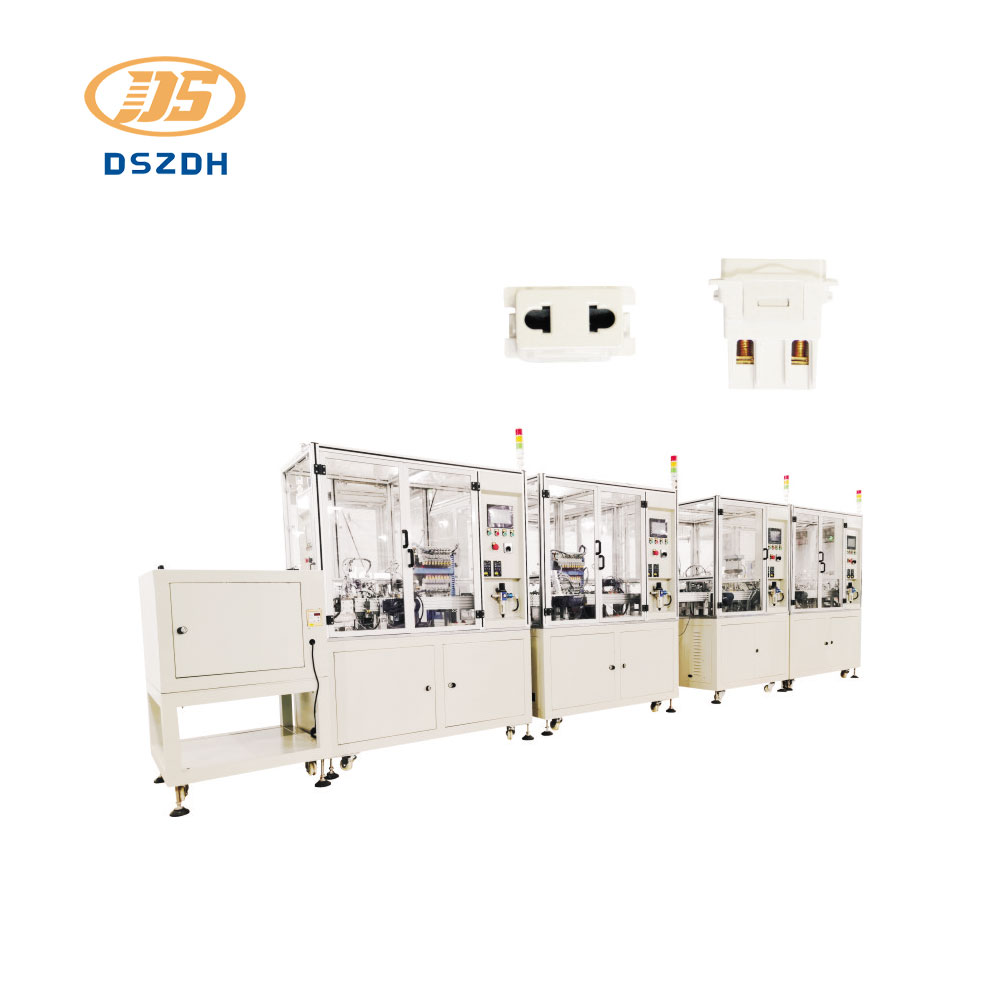
A machine is only part of the investment. The other part is the people behind it. Even strong equipment can underperform when the supplier lacks application understanding, communication discipline, or follow-up support. On the other hand, a supplier with solid engineering judgment can help prevent expensive mismatches before the machine is even built.
For that reason, buyers should look for evidence of product familiarity, automation experience, and a willingness to tailor the solution to production goals instead of pushing a one-size-fits-all answer. Zhejiang Desheng Intelligent Equipment Tech. Co., Ltd. describes its focus on automatic intelligent equipment, customization capability, and long-term work with electrical and industrial applications, including socket and plug assembly-related equipment.
In practical terms, the right supplier helps you answer questions such as:
- What assembly sequence should be automated first for the best return?
- Which tolerance risks deserve special checking?
- How should the line be configured for current and near-future product plans?
- Where can inspection and handling be integrated to reduce manual burden?
That kind of support is valuable because it keeps the equipment purchase tied to production results, not just machine specifications. If your goal is dependable growth, you need both engineering and accountability.
In the end, Socket & Plug Automatic Assembly Equipment matters because it gives manufacturers a more controlled path to output, quality, and consistency. It helps reduce the daily friction that slows real factories down. It makes scale more realistic. And it gives buyers a better chance of building a process that is not constantly being rescued by manual effort.
FAQ
Is Socket & Plug Automatic Assembly Equipment only suitable for very large factories?
No. It is especially valuable for factories that need stable quality, repeatable output, and lower dependence on manual assembly variation. The best-fit solution depends on product type, output target, and how much of the process you want to automate.
What is the biggest mistake buyers make when choosing this kind of equipment?
Many focus too much on nominal speed and not enough on feeding stability, inspection integration, maintainability, and product compatibility. A fast machine that does not match the actual process can create more trouble than it solves.
Can one machine handle different socket or plug models?
In many cases, yes, but it depends on the structural difference between models and how the machine is designed. Buyers should discuss current products and likely future variants early so the line can be configured more realistically.
Will automation remove the need for operators completely?
Usually not. What it often does is shift labor away from repetitive, error-prone assembly toward operation monitoring, material support, quality oversight, and maintenance coordination.
Why do customized solutions matter in socket and plug assembly?
Because component structure, fit requirements, feeding behavior, and product geometry are not always standard. Customization helps the equipment match the real product instead of forcing the product to adapt to an unsuitable machine.
Ready to Make Socket and Plug Assembly More Stable
If you are reviewing ways to improve assembly consistency, reduce labor pressure, and build a production line that can support future growth with fewer disruptions, now is a good time to take a closer look at the right automation approach. Zhejiang Desheng Intelligent Equipment Tech. Co., Ltd. offers experience in socket and plug assembly solutions as well as customized automation development for electrical manufacturing applications. If you want to discuss your product structure, output expectations, or line challenges in a more practical way, contact us and start the conversation with a solution built around your real production needs.