
Article Summary: For valve manufacturers, production inconsistency often appears in small but costly ways: unstable assembly pressure, missing components, incorrect orientation, surface damage, rework, slow manual inspection, and unpredictable output. This article explains how Spool Valve Automatic Assembly Equipment can help manufacturers improve assembly quality, reduce labor dependence, strengthen process control, and build a more reliable production line. It also discusses what buyers should evaluate before choosing a system, how automation supports long-term capacity planning, and why customized equipment matters when spool valve structures vary across industries.
Table of Contents
- Article Outline
- Production Pain Points Behind Spool Valve Assembly
- Why Automatic Assembly Matters for Spool Valve Manufacturing
- Core Process Flow of a Reliable Assembly Line
- Key Selection Factors for Buyers
- Why Customized Automation Is Often Necessary
- How Automation Supports Quality Control
- FAQ
- Contact Zhejiang Desheng Intelligent Equipment Tech. Co., Ltd.
Article Outline
- Identify the real bottlenecks in manual spool valve assembly.
- Explain how Spool Valve Automatic Assembly Equipment improves process stability.
- Break down the typical production flow from feeding to final inspection.
- Compare key buying factors such as compatibility, testing, flexibility, and maintenance.
- Show why non-standard customization is important for different valve structures.
- Answer common buyer questions before project evaluation.
Production Pain Points Behind Spool Valve Assembly
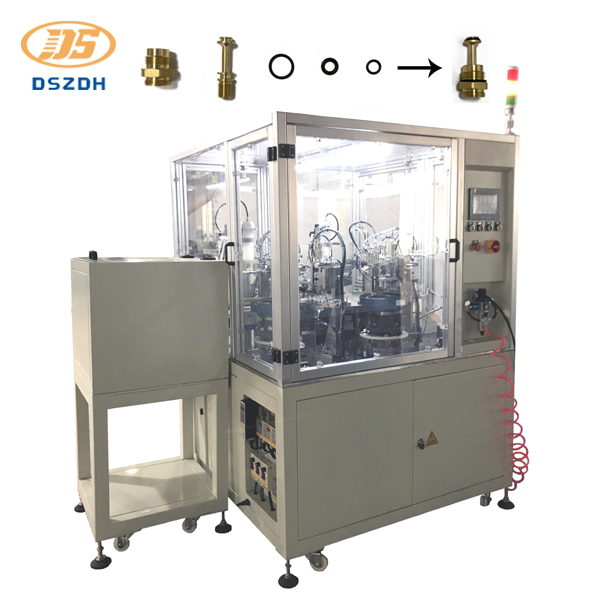
Spool valves may look compact, but their assembly process is rarely simple. A small positioning error, a missed sealing part, or uneven pressing force can affect product performance. In high-volume production, these small issues do not stay small. They turn into rejected batches, delayed delivery, repeated inspection, unstable output, and rising labor costs.
Many manufacturers begin with manual or semi-automatic assembly because it feels flexible at the early stage. Operators can adjust by hand, respond to small product differences, and keep the line running without heavy initial investment. However, once order volume increases, the weakness of manual assembly becomes obvious. Different operators may follow the same instruction but still produce different results. Fatigue can affect judgment. Visual inspection can miss tiny errors. Production speed may depend too much on individual worker experience.
This is where Spool Valve Automatic Assembly Equipment becomes valuable. It does not simply replace manual labor. More importantly, it turns key assembly actions into repeatable, measurable, and traceable steps. For buyers who care about long-term production stability, the equipment is not just a machine purchase. It is a process upgrade.
Buyer insight: If your current line depends heavily on experienced operators to “feel” whether assembly is correct, that process may already be difficult to scale. Automation helps convert personal experience into controlled parameters.
Why Automatic Assembly Matters for Spool Valve Manufacturing
The main value of Spool Valve Automatic Assembly Equipment is consistency. In valve production, consistency is not only about speed. It is about making sure each part enters the right station, faces the right direction, receives the right force, and passes the right inspection before moving forward.
A well-designed automatic assembly line can reduce common problems such as wrong part loading, incomplete assembly, unstable pressing, scratches during handling, missing O-rings, and inconsistent torque or insertion depth. These issues may seem ordinary, but they directly influence leakage performance, service life, customer complaints, and warranty cost.
For manufacturers producing spool valves for HVAC systems, fluid control components, pneumatic systems, or industrial control applications, assembly reliability is closely linked to brand reputation. When buyers choose a valve supplier, they often care about delivery time and price, but they also care about whether the supplier can repeat the same quality across large orders. Automatic assembly gives manufacturers a stronger foundation to answer that concern.
Zhejiang Desheng Intelligent Equipment Tech. Co., Ltd. focuses on intelligent automation equipment and customized assembly solutions. For spool valve projects, the practical goal is to help manufacturers build a line that fits the product structure, production rhythm, inspection requirements, and future capacity plan.
Core Process Flow of a Reliable Assembly Line
A complete spool valve assembly project may vary by product design, but the logic behind a reliable line is usually similar. The system needs to handle components accurately, assemble them in a controlled sequence, inspect key results, and separate qualified products from defective ones.
- Automatic feeding: Components can be supplied through bowl feeders, vibration plates, trays, or customized feeding systems depending on shape, material, and surface requirements.
- Orientation and positioning: The equipment identifies or guides parts into the correct direction before assembly, helping reduce wrong installation risks.
- Sequential assembly: Multiple parts are assembled according to the designed order, which may include inserting, pressing, riveting, locking, sealing, or other process actions.
- Parameter control: Critical actions such as pressure, depth, position, time, and motion can be controlled more consistently than manual work.
- Online inspection: Sensors, visual inspection, pressure detection, or presence checks can be integrated according to product requirements.
- Sorting and output: Qualified products and abnormal products can be separated automatically, making downstream handling cleaner and easier.
The best Spool Valve Automatic Assembly Equipment is not necessarily the fastest machine on paper. It is the equipment that matches the product structure and keeps stable performance during real production. A line that runs beautifully during a short demonstration but struggles after long hours of operation will not solve the buyer’s real problem.
Key Selection Factors for Buyers
Before investing in Spool Valve Automatic Assembly Equipment, buyers should evaluate more than machine appearance or quoted capacity. A practical decision should consider product compatibility, inspection logic, maintenance access, operator training, and future product changes.
| Selection Factor | What Buyers Should Check | Why It Matters |
|---|---|---|
| Product Compatibility | Valve size range, component shape, material, tolerance, and assembly sequence. | A line that does not match actual product variation may cause frequent jams or unstable assembly. |
| Feeding Method | Whether parts require vibration feeding, tray feeding, manual loading, or customized feeding. | Poor feeding design is one of the most common reasons for low efficiency in automatic lines. |
| Inspection Functions | Presence detection, orientation check, pressure monitoring, vision inspection, or leak-related testing. | Inspection reduces the risk of defective parts entering the next process or reaching customers. |
| Changeover Design | Whether the machine supports different models and how long changeover takes. | Flexible changeover helps manufacturers handle product families without building a separate line for every model. |
| Data and Traceability | Production count, alarm records, parameter records, and quality data export options. | Traceability supports internal management, customer audits, and continuous improvement. |
| Maintenance Access | Clear station layout, accessible wearing parts, simple troubleshooting, and spare part planning. | Easy maintenance reduces downtime and keeps production stable after installation. |
A buyer who only compares price may overlook hidden costs. A cheaper line that requires constant adjustment can cost more in downtime, rejected parts, labor support, and missed delivery. A better approach is to compare total production value: output stability, quality protection, service support, upgrade possibility, and long-term usability.
Why Customized Automation Is Often Necessary
Spool valves are not all the same. Different manufacturers may use different valve bodies, sealing parts, springs, copper components, plastic parts, or metal inserts. Even when the function looks similar, the assembly details may be very different. That is why standard machines often fail to fully meet the needs of serious valve production.
Customized Spool Valve Automatic Assembly Equipment allows the machine design to follow the product instead of forcing the product to fit a fixed machine. For example, one product may need careful surface protection because visible scratches are unacceptable. Another may require precise insertion depth because performance depends on internal clearance. Another may need multiple inspections because missing a tiny component could cause leakage or malfunction.
In a customized project, the buyer should provide detailed product drawings, samples, production capacity expectations, quality control points, current pain points, and future model plans. The equipment supplier can then evaluate feeding feasibility, station layout, cycle time, testing method, and risk points before confirming the technical solution.
This early communication is important. A good automation project is not won by rushing to quote. It is built by understanding the product, the factory environment, the quality standard, and the buyer’s real production pressure.
How Automation Supports Quality Control
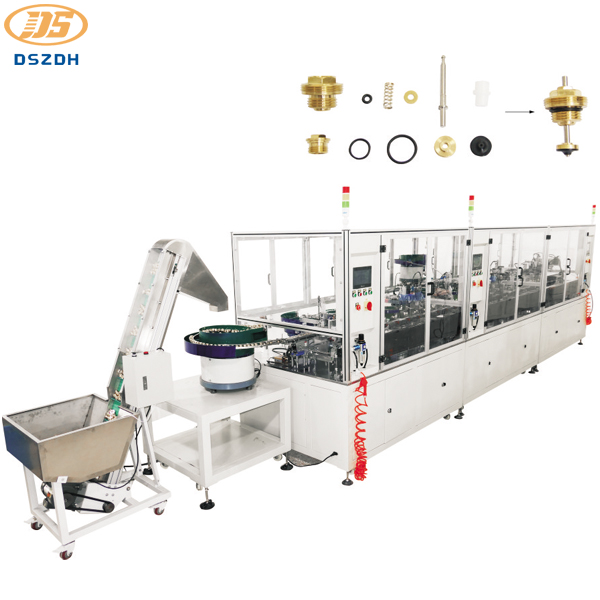
Quality control should not only happen at the end of production. For spool valve assembly, waiting until final inspection may be too late because the cause of failure may already be hidden inside the product. A smarter line checks quality throughout the process.
Spool Valve Automatic Assembly Equipment can integrate checks at different stages. Before assembly, it can verify whether parts are present and correctly positioned. During assembly, it can monitor key movement or force. After assembly, it can perform functional or appearance-related checks depending on the product requirement. When an abnormal result appears, the system can stop, alarm, mark the product, or separate it from qualified output.
This kind of process control helps manufacturers reduce dependence on final manual inspection. It also supports more stable communication with end customers. Instead of saying “our workers checked it,” the manufacturer can explain the controlled process behind the product. For buyers in competitive industries, that difference matters.
Another benefit is production management. When equipment records alarms, output, and abnormal points, managers can see where the line needs improvement. If one station causes repeated stoppages, the team can investigate the real cause. If a part tolerance creates feeding instability, the issue can be discussed with the part supplier. Automation makes problems more visible, and visible problems are easier to solve.
FAQ
Q1: What is Spool Valve Automatic Assembly Equipment used for?
It is used to automate the assembly process of spool valve products or related valve components. Depending on the product design, it may include feeding, positioning, pressing, inserting, detecting, testing, sorting, and output functions.
Q2: Is this equipment suitable for every spool valve model?
Not always. Spool valve structures can vary greatly, so the equipment should be evaluated according to product drawings, samples, size range, assembly sequence, and production goals. In many cases, a customized solution is more practical than a standard machine.
Q3: Can one machine handle multiple product models?
It may be possible if the models share similar structures and assembly logic. Buyers should discuss changeover requirements early, including tooling replacement, parameter adjustment, feeding compatibility, and expected changeover time.
Q4: What information should I prepare before asking for a solution?
You should prepare product drawings, samples, component lists, assembly videos if available, target capacity, inspection requirements, available workshop space, voltage or air supply conditions, and any current production problems.
Q5: Does automation remove the need for workers completely?
No. Automation reduces repetitive manual operations, but workers are still needed for material supply, monitoring, maintenance, quality management, and production coordination. The goal is not simply fewer people; the goal is a more stable and controllable process.
Q6: How should buyers judge whether a supplier is reliable?
Buyers should check whether the supplier understands the product process, asks detailed technical questions, provides a logical station design, considers inspection points, explains possible risks, and supports installation, training, and after-sales service.
Build a More Stable Spool Valve Assembly Process
If your current valve assembly process is facing unstable quality, slow output, high labor dependence, or repeated rework, a customized Spool Valve Automatic Assembly Equipment solution can help turn scattered manual steps into a controlled production system.
Zhejiang Desheng Intelligent Equipment Tech. Co., Ltd. can support manufacturers who need practical automation planning for spool valve assembly and related intelligent equipment projects. Share your product details, assembly requirements, and production goals with the team, and contact us to discuss a suitable automation solution for your next production upgrade.