- English
- 한국어
- Português
- русский
- Français
- 日本語
- Deutsch
- tiếng Việt
- Italiano
- Nederlands
- ภาษาไทย
- Polski
- Svenska
- magyar
- Malay
- বাংলা ভাষার
- Dansk
- Suomi
- हिन्दी
- Pilipino
- Türkçe
- Gaeilge
- العربية
- Indonesia
- Norsk
- تمل
- český
- ελληνικά
- український
- Javanese
- فارسی
- தமிழ்
- తెలుగు
- नेपाली
- Burmese
- български
- ລາວ
- Latine
- Қазақша
- Euskal
- Azərbaycan
- Slovenský jazyk
- Македонски
- Lietuvos
- Eesti Keel
- Română
- Slovenski
- मराठी
- Srpski језик
- Español

How Can a Mask Making Machine Help Manufacturers Solve Speed, Quality, and Labor Pressure at the Same Time?
When buyers look for production equipment, they are rarely searching for a machine alone. They are trying to solve unstable output, rising labor costs, inconsistent weld quality, long changeover time, and pressure from delivery schedules. This article explores how a modern mask making machine addresses those concerns in practical manufacturing terms and what decision-makers should really evaluate before they invest.
Article Summary
A Mask Making Machine is no longer viewed as a simple piece of workshop equipment. For many producers, it has become a direct answer to labor shortages, output bottlenecks, and customer complaints caused by uneven product quality. In this article, I break down what buyers actually care about when comparing machines: production flow, reliability, welding consistency, material compatibility, maintenance load, and return on investment. I also explain why the right supplier matters just as much as the machine itself. Drawing on the capabilities associated with Zhejiang Desheng Intelligent Equipment Tech. Co., Ltd., this guide helps manufacturers understand what to look for if they want smoother production, fewer interruptions, and a more stable path from raw material feeding to finished mask output.
Table of Contents
- What Will This Article Cover?
- What Problems Are Buyers Really Trying to Fix?
- How Does a Mask Making Machine Improve the Production Workflow?
- Which Features Actually Matter in Real Production?
- What Should Manufacturers Compare Before Buying?
- Why Does the Supplier Make Such a Big Difference?
- What Questions Do Buyers Ask Most Often?
- How Should You Take the Next Step?
What Will This Article Cover?
- How manufacturers usually struggle before automation is introduced
- How a Mask Making Machine supports forming, feeding, welding, cutting, and output consistency
- What technical and operational points matter more than brochure language
- How to judge whether a machine fits your materials, labor structure, and production goals
- Why cooperation with an experienced equipment partner reduces long-term risk
What Problems Are Buyers Really Trying to Fix?
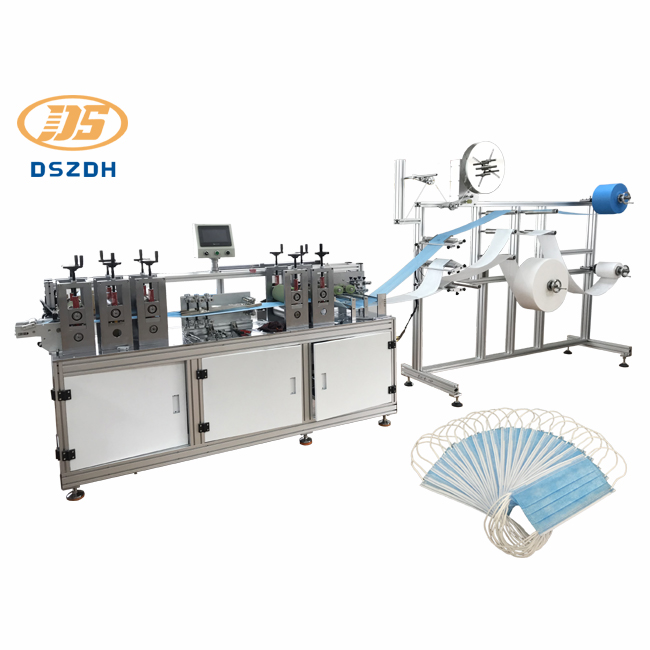
I have noticed that most manufacturing teams do not begin their search because they suddenly love automation. They begin because something has become difficult to manage. One factory may be missing delivery targets because manual steps slow everything down. Another may be producing large volumes, but customer feedback reveals ear loop weld failures or poor shape consistency. In some cases, management is spending too much on labor for work that is repetitive, tiring, and difficult to stabilize across shifts.
A reliable Mask Making Machine is appealing because it addresses several of these issues at once. Instead of treating feeding, forming, cutting, and welding as separate headaches, it creates a more integrated flow. That matters because production trouble is rarely caused by one dramatic failure. More often, it is caused by dozens of small inconsistencies that pile up every hour.
Buyers are usually trying to reduce three kinds of pressure at the same time: operational pressure, quality pressure, and cost pressure.
What does operational pressure look like?
- Too many manual steps between raw material and finished mask
- Frequent stops for alignment or rework
- Shift-to-shift variation in output
- Difficulty training new workers fast enough
What does quality pressure look like?
- Uneven folding or poor nose strip placement
- Unstable ear loop welding strength
- Finished masks that do not fit consistently
- Waste caused by misfeeds or cutting defects
How Does a Mask Making Machine Improve the Production Workflow?
On a practical level, the value of a Mask Making Machine comes from turning a fragmented process into a controlled production sequence. On the product page of Zhejiang Desheng Intelligent Equipment Tech. Co., Ltd., the machine flow is described around key stages such as coil material feeding, folding and pressing, nose strip feeding, mask forming, mask cutting, ear belt feeding and welding, and finished product output. That full-chain logic is exactly what many buyers need, because it reduces dependence on multiple disconnected operations.
The biggest advantage is not simply speed. It is continuity. When material handling, forming, welding, and output are coordinated within one production system, the factory gains a more repeatable result. That means supervisors spend less time firefighting, operators spend less time correcting basic errors, and production planning becomes more realistic.
| Production Stage | What Often Goes Wrong in Less Stable Setups | What a Better Integrated Machine Helps Improve |
|---|---|---|
| Material Feeding | Misalignment, tension inconsistency, wasted raw materials | More stable feeding rhythm and better material control |
| Folding and Pressing | Shape variation and poor mask structure | More uniform body formation across batches |
| Nose Strip Feeding | Incorrect placement or incomplete insertion | Better positional consistency and product usability |
| Cutting | Rough edges, size variation, stoppages | Cleaner, more repeatable mask dimensions |
| Ear Loop Welding | Weak welds and uncomfortable finished products | Stronger, more stable attachment quality |
| Finished Output | Pile-up, handling inefficiency, downstream confusion | Smoother collection and easier next-step handling |
This is where many buyers begin to see the broader business effect. A Mask Making Machine is not just reducing human touchpoints. It is making output easier to predict. And in manufacturing, predictability is often worth more than one-time peak speed.
Which Features Actually Matter in Real Production?
Some machine descriptions sound impressive but do not tell a buyer much about day-to-day usability. I think it is much smarter to focus on features that influence real production performance instead of just headline claims. A machine can look advanced on paper and still become a burden if it is difficult to adjust, sensitive to material variation, or constantly waiting for maintenance.
Here are the features that deserve serious attention when evaluating a Mask Making Machine:
- Process integration so the production flow feels coordinated rather than patched together
- Consistent welding performance because weak ear loop attachment quickly becomes a customer complaint
- Material adaptability so the system can handle your actual production materials, not just ideal testing conditions
- User-friendly adjustments for faster setup, better shift turnover, and fewer avoidable errors
- Stable continuous running because output targets mean very little if frequent stops erase the gains
- Service and customization support when your line requirements are not identical to someone else’s
That last point matters more than buyers sometimes expect. Zhejiang Desheng Intelligent Equipment Tech. Co., Ltd. presents itself as a manufacturer focused on automation and customization, and that can be highly relevant for factories that do not want an overly generic solution. In real purchasing decisions, customization is not about luxury. It is about fit. If your raw materials, layout, or production rhythm differ from the standard case, a machine supplier that understands adjustments can save you a lot of frustration later.
What Should Manufacturers Compare Before Buying?
Many buyers compare machines too narrowly. They ask about speed first and price second, then realize later that they never asked the most important questions. A faster machine is not automatically a better choice if it is difficult to maintain, requires highly skilled operators, or creates more waste than expected.
I would compare a Mask Making Machine using a broader checklist like this:
| Evaluation Point | Why It Matters | What to Ask the Supplier |
|---|---|---|
| Production Stability | Output matters only if it can be sustained | How does the machine perform during long continuous runs? |
| Quality Consistency | Poor consistency creates waste and complaints | How is product uniformity maintained across batches? |
| Adjustment Efficiency | Slow setup reduces real productivity | How quickly can operators make routine adjustments? |
| Maintenance Load | Complex maintenance increases downtime risk | Which parts need regular service and how often? |
| Support Responsiveness | Production delays become expensive fast | What support is available after installation? |
| Customization Potential | Standard equipment may not suit every line | Can the machine be adapted to our specific process needs? |
This kind of comparison leads to a more realistic decision. It helps buyers think beyond catalog language and focus on whether the machine will behave well on their own floor, with their own team, and under their own deadlines.
Why Does the Supplier Make Such a Big Difference?
Equipment performance does not depend on metal and motors alone. It also depends on communication, design understanding, problem-solving ability, and how seriously the supplier treats after-sales support. That is why choosing a supplier is often as important as choosing the machine model.
A factory may buy a machine with attractive specifications, but if installation guidance is weak, troubleshooting is slow, or customization requests are handled poorly, the purchase can become stressful very quickly. On the other hand, when the supplier has experience in automation and understands how manufacturers work under pressure, the relationship becomes much more useful. Questions get answered faster. Adjustments become easier. Downtime becomes less painful.
For that reason, many buyers prefer to work with manufacturers such as Zhejiang Desheng Intelligent Equipment Tech. Co., Ltd. that position themselves around automation expertise and tailored equipment solutions. That approach can be especially important for businesses that want a Mask Making Machine to fit into a broader production system rather than stand alone as an isolated machine purchase.
The right supplier helps you buy with fewer surprises. The wrong supplier makes even a decent machine feel difficult to live with.
Is a Mask Making Machine Only About Efficiency?
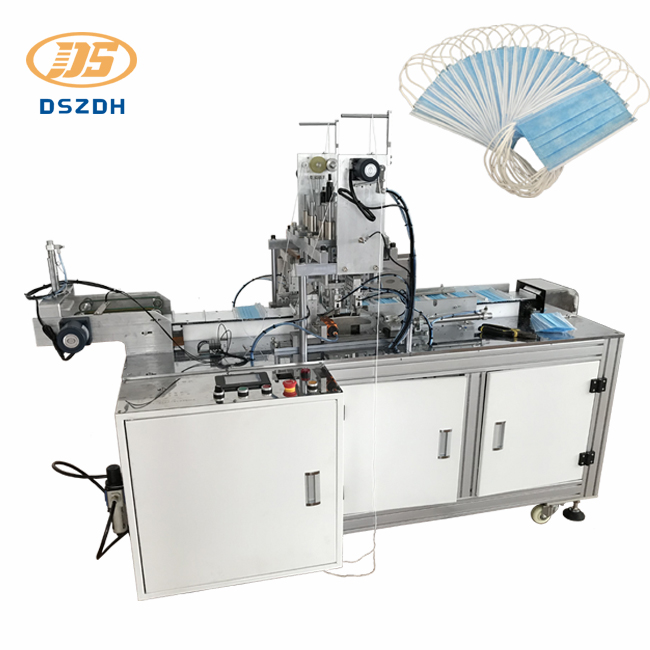
Not really. Efficiency is one benefit, but it is not the whole story. For many businesses, the stronger argument is control. Better control over shape. Better control over welding quality. Better control over labor planning. Better control over deadlines. In a competitive market, that kind of control can change how confidently a manufacturer quotes orders and serves customers.
I also think it is important to recognize the human side of automation. Repetitive manual work is tiring and difficult to keep stable over long shifts. A dependable Mask Making Machine does not just reduce labor intensity. It also allows workers to spend more attention on monitoring, quality checks, and smoother line management instead of repeating the same high-frequency hand operations all day.
That creates a better production environment overall. Fewer rushed corrections. Fewer preventable defects. Fewer moments where management has to choose between quality and shipping speed.
What Questions Do Buyers Ask Most Often?
Can a Mask Making Machine really reduce labor dependency?
Yes, especially when the machine covers multiple production stages in one flow. It reduces the need for repeated manual transfer, alignment, and welding tasks, which helps factories stabilize output with fewer labor bottlenecks.
Does higher speed always mean better value?
No. Real value comes from the balance of speed, stability, quality, and maintenance practicality. A slightly slower machine with fewer stoppages may create better overall output than a faster one that constantly needs intervention.
Why is customization important for mask production equipment?
Because every factory has different raw materials, staffing patterns, layout constraints, and output goals. A machine that can be adjusted to your actual process is often more useful than a generic one that looks good in a brochure.
What is the biggest mistake buyers make?
They focus too heavily on price or theoretical speed while ignoring support, adjustment convenience, and long-run stability. Those overlooked factors often determine whether the machine becomes an asset or a daily headache.
How should I start a serious discussion with a supplier?
Share your target output, material details, product requirements, current pain points, and any layout or staffing constraints. The clearer your production reality is, the more useful the supplier’s recommendation will be.
How Should You Take the Next Step?
If you are evaluating equipment right now, I would not treat this as a simple machine purchase. Treat it as a production decision that affects output reliability, product consistency, labor planning, and customer satisfaction. The right Mask Making Machine should help your operation become calmer, more predictable, and easier to scale.
If your team is looking for a partner with automation experience and a practical understanding of customized equipment, Zhejiang Desheng Intelligent Equipment Tech. Co., Ltd. is worth considering. A productive conversation starts with clear manufacturing goals, and the sooner those goals are translated into the right machine configuration, the sooner your line can move from pressure to control.
Ready to improve your production line with a more reliable solution?
Whether you are expanding capacity, replacing manual processes, or trying to improve finished mask consistency, now is the right time to discuss a machine setup that truly fits your factory. Contact us to talk about your production goals, material requirements, and customization needs, and take the next step toward a smarter, more dependable mask manufacturing process.
Contact us