- English
- 한국어
- Português
- русский
- Français
- 日本語
- Deutsch
- tiếng Việt
- Italiano
- Nederlands
- ภาษาไทย
- Polski
- Svenska
- magyar
- Malay
- বাংলা ভাষার
- Dansk
- Suomi
- हिन्दी
- Pilipino
- Türkçe
- Gaeilge
- العربية
- Indonesia
- Norsk
- تمل
- český
- ελληνικά
- український
- Javanese
- فارسی
- தமிழ்
- తెలుగు
- नेपाली
- Burmese
- български
- ລາວ
- Latine
- Қазақша
- Euskal
- Azərbaycan
- Slovenský jazyk
- Македонски
- Lietuvos
- Eesti Keel
- Română
- Slovenski
- मराठी
- Srpski језик
- Español

Which Customized Automatic Machine Fits a Modern Factory Better Than a Standard Solution?
Article Summary
Choosing a Customized Automatic Machine is no longer just a technical decision. For many manufacturers, it is now a practical response to unstable labor availability, rising defect costs, inconsistent throughput, and the need to adapt production around specific product structures. In this article, I explain why standard machines often create hidden inefficiencies, how a customized solution solves real factory pain points, what buyers should evaluate before placing an order, and how to judge return on investment without relying on vague promises. I also look at machine flexibility, testing integration, line compatibility, maintenance planning, and project communication from the buyer’s point of view.
Table of Contents
- Outline
- What makes this topic important today
- What problems standard machines usually fail to solve
- What a customized solution really changes
- How standard and customized equipment compare
- Which factors buyers should review before investing
- What a sensible customization workflow should look like
- How to think about cost and long-term value
- Which machine partner is worth trusting
- FAQ
- Final thoughts
Outline
- The shift from generic automation to purpose-built automation
- The most common production bottlenecks behind customization requests
- The practical advantages of a Customized Automatic Machine
- A side-by-side comparison between standard and customized equipment
- How buyers can reduce risk before the project begins
- How engineering communication influences final machine performance
- Why lifecycle value matters more than the purchase price alone
- How to evaluate an automation manufacturer with confidence
What makes this topic important today
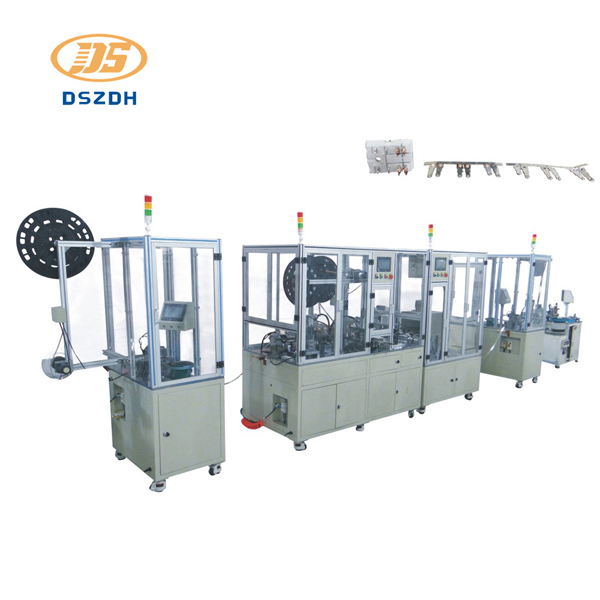
In many factories, automation is no longer a question of image or modernization for its own sake. It has become a direct answer to operational pressure. Production teams are expected to deliver higher output, tighter quality control, and shorter lead times while dealing with labor turnover, training gaps, changing product specifications, and mounting cost sensitivity. Under those conditions, one uncomfortable truth appears very quickly: a machine that is merely available is not always a machine that is truly suitable.
That is exactly where a Customized Automatic Machine begins to make sense. Instead of forcing a production process to adapt to a generic machine frame, the equipment is designed around the actual needs of the product, the assembly rhythm, the inspection points, the feeding logic, and the output goals. This difference sounds simple on paper, but in practice it affects almost everything: efficiency, scrap rate, manpower allocation, floor planning, maintenance frequency, and line stability.
Zhejiang Desheng Intelligent Equipment Tech. Co., Ltd. works in this space from the perspective that automation should not be treated as a one-size-fits-all product. For buyers who are dealing with specialized components, repeated process variations, or labor-heavy assembly tasks, that mindset is often far more useful than a standard machine catalog.
What problems standard machines usually fail to solve
I often notice that buyers do not start by asking for customization because they want something complicated. They ask for it because a standard machine has already failed them in one of several predictable ways.
- Product structures are too specific. Small dimensional differences, fragile components, irregular insertion paths, or multi-step assembly sequences can make standard equipment unreliable.
- Output targets are not being met. A standard machine may function, but it may not reach the expected takt time once real factory conditions enter the picture.
- Quality variation is too high. Manual handling points, inconsistent positioning, or limited in-line testing can allow defects to pass through the line.
- Labor dependence remains too heavy. Some semi-automatic solutions still require too many operators, reducing the real benefit of automation.
- Future product changes were never considered. When a machine cannot accommodate planned variations, the buyer ends up facing a second investment sooner than expected.
These issues are expensive not only because they reduce productivity, but because they create invisible management drag. Supervisors spend more time solving interruptions, operators need more intervention, and quality teams end up compensating for equipment limits that should have been addressed at the design stage.
What a customized solution really changes
A good Customized Automatic Machine does more than automate movement. It translates a real production requirement into a stable manufacturing system. That means the machine is built around how the product behaves, how materials feed, where verification should happen, and how finished output must be delivered.
The strongest value usually appears in the following areas:
- More accurate process matching. The machine is designed for the buyer’s specific part, sequence, and operating logic instead of asking the factory to compromise.
- Higher consistency. Fixtures, motion control, feeding methods, and test integration are aligned to reduce deviation.
- Better use of labor. Repetitive manual steps can be reduced or removed, allowing people to move into inspection, oversight, or higher-value tasks.
- Cleaner quality management. When assembly and testing are integrated into one workflow, issues can be detected earlier instead of after full batch completion.
- Greater long-term adaptability. A well-planned project can leave room for model expansion, tooling changes, or process upgrades later.
That is why buyers in sectors such as electrical components, switch assembly, relay-related products, sockets, plugs, valves, or specialized auto parts often prefer customization. Their production reality is too specific to be served well by generic automation alone.
How standard and customized equipment compare
| Comparison Point | Standard Machine | Customized Automatic Machine |
|---|---|---|
| Product compatibility | Designed for broad common use | Designed around actual product dimensions and process flow |
| Setup logic | May require production to adapt to machine limits | Machine structure follows the buyer’s real application |
| Quality control | Often depends on external checks | Can include integrated testing and inspection points |
| Labor reduction | Moderate in many cases | Usually stronger when processes are properly engineered |
| Scalability | Limited if products change | Can be planned with future variants in mind |
| Initial lead time | Shorter | Longer but more targeted |
| Hidden operational cost | Can remain high after purchase | Often lower when matched correctly to production needs |
This is where buyers need to be honest with themselves. If the process is simple, fixed, and highly standardized, a standard machine may be enough. But if the line suffers from recurring inefficiency, frequent product variation, or unstable output quality, the cheaper machine can become the more expensive choice over time.
Which factors buyers should review before investing
Before ordering a Customized Automatic Machine, I would strongly recommend reviewing the project through a production lens instead of a purchasing lens alone. Buyers get better results when they organize the following information early:
- Product drawings and tolerances so the machine builder understands exact structure requirements
- Target output per hour or per shift so the design is tied to realistic expectations
- Existing pain points such as jamming, low yield, manual misalignment, or inspection failures
- Available factory space including operator side, material loading, and finished goods flow
- Power, air, and integration conditions so installation is not delayed later
- Future product variation plans if the buyer expects model expansion
- Acceptance criteria so everyone agrees on how success will be measured
When these points are vague, the project becomes slower and riskier. When they are clear, both the buyer and machine supplier can move with much more confidence.
What a sensible customization workflow should look like
Many buyers worry that customization automatically means uncertainty. That fear is understandable, but the real issue is not customization itself. The real issue is whether the supplier has a disciplined process.
A sensible workflow often looks like this:
- Requirement confirmation with samples, drawings, process expectations, and output goals
- Feasibility analysis to identify motion path, feeding logic, tooling needs, and testing points
- Solution proposal covering machine structure, automation scope, cycle expectation, and basic layout
- Manufacturing and assembly of the custom machine and fixtures
- Trial running and adjustment based on the actual product and production rhythm
- Inspection and buyer verification before shipment
- Installation, training, and support after delivery
This process matters because buyers do not just purchase a machine. They purchase predictability. The more structured the communication and testing stages are, the lower the risk of mismatch after delivery.
How to think about cost and long-term value
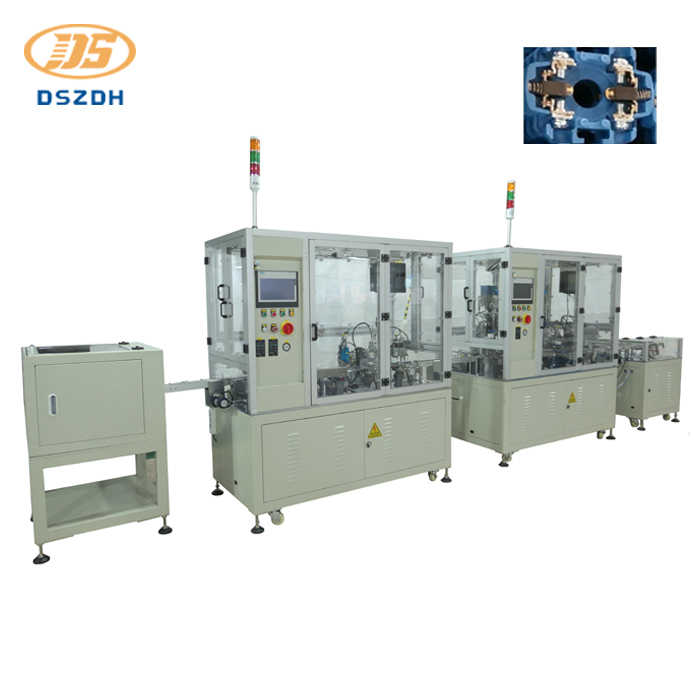
One of the most common mistakes in automation sourcing is comparing only the initial quotation. That number matters, of course, but it is never the full story. The more useful question is this: what will the machine cost or save over its working life?
| Cost Perspective | Short-Term View | Long-Term View |
|---|---|---|
| Purchase price | Focus on upfront expenditure | Compare with total productivity gain over time |
| Labor | May look manageable today | Can keep rising due to turnover and supervision needs |
| Defects and rework | Often underestimated | Can exceed equipment price difference over time |
| Downtime | Rarely included in first comparison | Major influence on actual production cost |
| Future expansion | Ignored at the start | Very important if new product models are planned |
A well-built Customized Automatic Machine can justify itself through output consistency, labor savings, reduced scrap, smoother inspection, and fewer process interruptions. In other words, the best value often appears after the invoice has already been paid.
Which machine partner is worth trusting
Buyers should not judge an automation supplier only by polished photos or broad claims. A better approach is to ask whether the manufacturer understands the product category, the assembly logic, and the practical constraints of factory production.
Zhejiang Desheng Intelligent Equipment Tech. Co., Ltd. presents itself as a manufacturer focused on automation solutions and customized automatic machines, with experience serving a range of industrial applications. For buyers, that kind of specialization is useful because customization works best when engineering knowledge meets real production familiarity.
When reviewing a potential supplier, I would look for these signals:
- Ability to discuss your product in process terms rather than only sales language
- Experience with automatic assembly, testing, insertion, riveting, locking, or similar operations
- Willingness to clarify acceptance criteria before manufacturing begins
- A realistic attitude toward cycle time, precision, and operating stability
- Support after delivery, including training and technical response
A strong supplier does not simply agree to every request. A strong supplier explains what is possible, what needs adjustment, and what design route will deliver the most stable result.
FAQ
What is a Customized Automatic Machine
It is an automated piece of equipment designed around a customer’s specific product, production process, and output requirements rather than built as a generic standard model.
Which factories benefit most from customization
Factories with specialized components, multiple assembly steps, strict inspection requirements, unstable manual output, or plans for scaling production usually benefit the most.
What is the biggest advantage over a standard machine
The biggest advantage is process fit. A customized solution can align much more closely with the real product and workflow, which usually improves consistency, productivity, and labor efficiency.
What should I prepare before asking for a quotation
Product drawings, samples, production targets, known pain points, available floor space, utility conditions, and any quality checkpoints you want included are all helpful.
Can a Customized Automatic Machine support future product upgrades
In many cases, yes. If future product variation is discussed early, the machine design can often include room for fixture changes, modular sections, or controlled adjustment ranges.
Is customization always the more expensive option
It is often more expensive upfront, but not always more expensive overall. If it reduces labor, defects, and downtime significantly, the long-term operating value can be much better.
What should you do next if standard automation no longer fits
If your production line is already telling you that a standard solution is too rigid, too manual, or too inconsistent, it may be time to evaluate a better path. A well-designed Customized Automatic Machine can help you improve throughput, reduce risk, and build a more dependable manufacturing process around the products you actually make.
Zhejiang Desheng Intelligent Equipment Tech. Co., Ltd. can be a practical option for buyers who want automation built around real factory requirements rather than generic assumptions. If you are planning a new line, upgrading an existing one, or looking for a more efficient solution for specialized assembly tasks, now is the right time to review your process in detail.
To discuss your product structure, production goals, or customization needs, contact us and start the conversation with a solution that is built for your factory instead of borrowed from someone else’s.