- English
- 한국어
- Português
- русский
- Français
- 日本語
- Deutsch
- tiếng Việt
- Italiano
- Nederlands
- ภาษาไทย
- Polski
- Svenska
- magyar
- Malay
- বাংলা ভাষার
- Dansk
- Suomi
- हिन्दी
- Pilipino
- Türkçe
- Gaeilge
- العربية
- Indonesia
- Norsk
- تمل
- český
- ελληνικά
- український
- Javanese
- فارسی
- தமிழ்
- తెలుగు
- नेपाली
- Burmese
- български
- ລາວ
- Latine
- Қазақша
- Euskal
- Azərbaycan
- Slovenský jazyk
- Македонски
- Lietuvos
- Eesti Keel
- Română
- Slovenski
- मराठी
- Srpski језик
- Español

How Does an Automatic Tapping Machine Increase Productivity in Modern Manufacturing
An Automatic Tapping Machine has become an essential piece of equipment in modern manufacturing, enabling faster, more accurate, and more consistent thread processing across a wide range of industries. Compared with manual or semi-automatic tapping methods, automatic tapping machines significantly reduce cycle time, labor dependency, and error rates while improving overall production efficiency.
This article provides an in-depth explanation of how automatic tapping machines work, their core advantages, application scenarios, and how manufacturers can select the right solution to maximize productivity. Drawing on industry practices and automation expertise from Desheng, this guide is designed to help engineers, factory owners, and procurement managers make informed decisions.
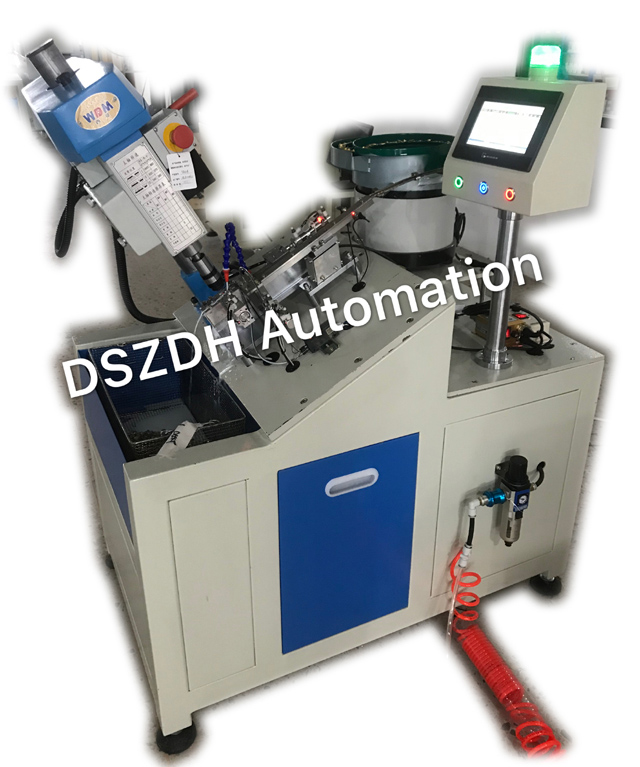
Table of Contents
- 1. What Is an Automatic Tapping Machine?
- 2. How Automatic Tapping Machines Work
- 3. Key Productivity Challenges in Traditional Tapping
- 4. How Automatic Tapping Machines Improve Productivity
- 5. Core Features of a High-Performance Automatic Tapping Machine
- 6. Comparison: Automatic vs Manual vs CNC Tapping
- 7. Industries That Benefit Most from Automatic Tapping
- 8. How to Choose the Right Automatic Tapping Machine
- 9. Maintenance, Reliability, and Long-Term Efficiency
- 10. FAQs About Automatic Tapping Machines
1. What Is an Automatic Tapping Machine?
An Automatic Tapping Machine is a specialized industrial device designed to create internal threads in pre-drilled holes with minimal human intervention. Unlike manual tapping machines, automatic systems use programmed motion control, torque monitoring, and automated feeding mechanisms to ensure consistent and repeatable threading operations.
Modern automatic tapping machines are widely used in mass production environments where precision, speed, and reliability are critical. They are commonly integrated into automated production lines or used as standalone workstations.
- Consistent thread depth and pitch
- Reduced operator skill dependency
- Higher throughput and repeatability
2. How Automatic Tapping Machines Work
The working principle of an automatic tapping machine combines mechanical motion, servo or pneumatic control, and intelligent feedback systems. Once a workpiece is positioned, the machine automatically completes the tapping cycle without manual adjustment.
- Workpiece positioning and clamping
- Tap alignment and downward feeding
- Thread cutting with controlled torque
- Automatic reverse and tap withdrawal
- Cycle completion and preparation for the next part
Advanced models offered by manufacturers like Desheng can be equipped with multi-axis control, touch-screen interfaces, and programmable tapping parameters to handle complex production requirements.
3. Key Productivity Challenges in Traditional Tapping
Before automation, many manufacturers relied on manual or semi-automatic tapping methods, which introduce several efficiency bottlenecks:
- High labor intensity and operator fatigue
- Inconsistent thread quality
- Frequent tap breakage
- Low production speed
- High rejection and rework rates
These issues directly impact production costs and make it difficult for manufacturers to scale operations efficiently.
4. How Automatic Tapping Machines Improve Productivity
Automatic tapping machines address these challenges through intelligent automation. Their impact on productivity can be measured in multiple dimensions.
4.1 Faster Cycle Times
Automated tapping cycles are optimized for speed and consistency. Once parameters are set, each tapping operation is completed in seconds, significantly reducing per-part processing time.
4.2 Reduced Labor Dependency
One operator can manage multiple automatic tapping machines simultaneously, reducing labor costs and improving workforce allocation.
4.3 Improved Quality Consistency
Automatic torque control and depth monitoring ensure uniform thread quality across large production batches.
4.4 Lower Tool Breakage Rate
By maintaining optimal cutting conditions, automatic tapping machines minimize excessive force and extend tap tool life.
5. Core Features of a High-Performance Automatic Tapping Machine
| Feature | Function | Productivity Benefit |
|---|---|---|
| Servo Control System | Precise speed and depth control | Higher accuracy and repeatability |
| Torque Protection | Automatic stop on overload | Reduced tap breakage |
| Multi-Spindle Design | Multiple holes tapped simultaneously | Higher throughput |
| Touch Screen Interface | Easy parameter setting | Reduced setup time |
6. Comparison: Automatic vs Manual vs CNC Tapping
| Type | Efficiency | Accuracy | Labor Requirement |
|---|---|---|---|
| Manual Tapping | Low | Operator-dependent | High |
| CNC Tapping | Medium–High | Very High | Medium |
| Automatic Tapping Machine | High | High & Consistent | Low |
7. Industries That Benefit Most from Automatic Tapping
- Automotive components manufacturing
- Electronics and electrical enclosures
- Hardware and fastener production
- Machinery and equipment manufacturing
- Metal furniture and structural parts
These industries require high-volume, repeatable threading operations, making automatic tapping machines a natural fit.
8. How to Choose the Right Automatic Tapping Machine
When selecting an automatic tapping machine, manufacturers should evaluate:
- Material type and thickness
- Thread size range
- Required production volume
- Automation level and integration needs
- After-sales support and customization options
Experienced automation suppliers such as Desheng provide tailored solutions that align with specific production goals and factory layouts.
9. Maintenance, Reliability, and Long-Term Efficiency
A well-designed automatic tapping machine requires minimal maintenance. Regular lubrication, tool inspection, and software updates are typically sufficient to ensure long-term stable operation.
Over time, the productivity gains and reduced downtime deliver a strong return on investment for manufacturers.
10. FAQs About Automatic Tapping Machines
Q1: Can an automatic tapping machine handle different thread sizes?
Yes. Most machines support a wide range of thread sizes through adjustable parameters and interchangeable taps.
Q2: Is an automatic tapping machine suitable for small factories?
Absolutely. Compact and semi-automatic models are cost-effective solutions for small and medium-sized enterprises.
Q3: How does automatic tapping improve worker safety?
By reducing manual handling and repetitive operations, automatic tapping machines lower the risk of workplace injuries.
Q4: Can automatic tapping machines be integrated into production lines?
Yes. Many systems are designed for seamless integration with conveyors, robots, and other automation equipment.
Conclusion
An Automatic Tapping Machine is no longer just an optional upgrade—it is a strategic investment for manufacturers aiming to improve productivity, quality, and competitiveness. By automating one of the most repetitive yet critical machining processes, companies can achieve consistent results while reducing operational costs.
If you are looking for a reliable and scalable automatic tapping solution tailored to your production needs, partnering with an experienced automation provider like Desheng can help you unlock long-term manufacturing efficiency.
To learn more about automatic tapping machines or to discuss a customized automation solution, contact us today and take the next step toward smarter manufacturing.