- English
- 한국어
- Português
- русский
- Français
- 日本語
- Deutsch
- tiếng Việt
- Italiano
- Nederlands
- ภาษาไทย
- Polski
- Svenska
- magyar
- Malay
- বাংলা ভাষার
- Dansk
- Suomi
- हिन्दी
- Pilipino
- Türkçe
- Gaeilge
- العربية
- Indonesia
- Norsk
- تمل
- český
- ελληνικά
- український
- Javanese
- فارسی
- தமிழ்
- తెలుగు
- नेपाली
- Burmese
- български
- ລາວ
- Latine
- Қазақша
- Euskal
- Azərbaycan
- Slovenský jazyk
- Македонски
- Lietuvos
- Eesti Keel
- Română
- Slovenski
- मराठी
- Srpski језик
- Español

How Can an Automatic Ultrasonic Riveting Machine Improve Manufacturing Efficiency
An Automatic Ultrasonic Riveting Machine has become a critical solution for modern manufacturing industries that require fast, precise, and reliable plastic assembly. By integrating ultrasonic energy with automated control systems, this technology significantly enhances production efficiency, reduces labor dependency, and ensures consistent joint quality. This article explores how automatic ultrasonic riveting machines improve manufacturing efficiency, their working principles, key advantages, applications, selection criteria, and future trends in industrial automation.
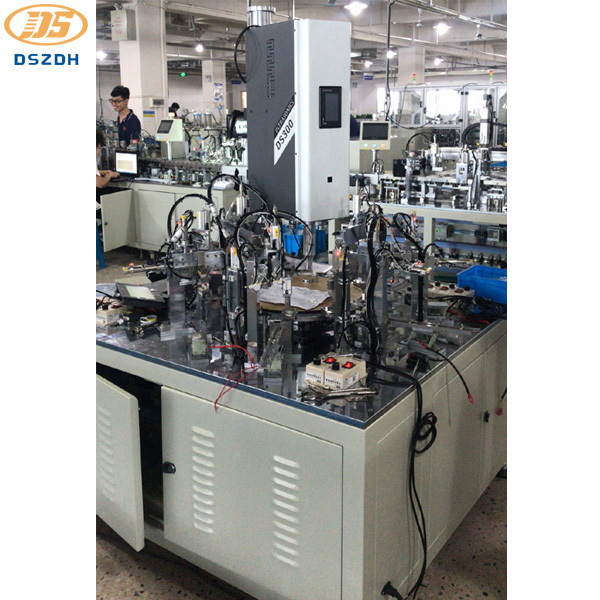
Table of Contents
- 1. Understanding Automatic Ultrasonic Riveting Machines
- 2. How Ultrasonic Riveting Technology Works
- 3. Key Ways Automatic Ultrasonic Riveting Improves Efficiency
- 4. Comparison with Traditional Riveting Methods
- 5. Industrial Applications and Use Cases
- 6. Core Components and Technical Features
- 7. How to Choose the Right Automatic Ultrasonic Riveting Machine
- 8. Future Trends in Ultrasonic Riveting Automation
- 9. Frequently Asked Questions (FAQ)
1. Understanding Automatic Ultrasonic Riveting Machines
An Automatic Ultrasonic Riveting Machine is an advanced assembly system that uses high-frequency ultrasonic vibrations to deform and bond thermoplastic components. Unlike mechanical fastening or adhesive bonding, ultrasonic riveting relies on frictional heat generated by ultrasonic energy to soften plastic rivet points and form strong, permanent joints.
Automation plays a crucial role by integrating programmable logic controllers (PLC), servo systems, and intelligent sensors. Companies like Desheng design automatic ultrasonic riveting machines to seamlessly fit into high-volume production lines, ensuring repeatability, precision, and minimal human intervention.
2. How Ultrasonic Riveting Technology Works
Ultrasonic riveting technology converts electrical energy into high-frequency mechanical vibrations. These vibrations are transmitted through a horn (sonotrode) to the plastic rivet, causing localized heating and controlled deformation.
Basic Working Process
- Plastic components are positioned in a fixture.
- The ultrasonic horn contacts the plastic rivet post.
- Ultrasonic vibrations soften the plastic.
- The rivet head forms under controlled pressure.
- The material cools, creating a strong joint.
For a detailed technical overview, you can also refer to this resource on automatic ultrasonic riveting machine technology.
3. Key Ways Automatic Ultrasonic Riveting Improves Efficiency
3.1 Faster Cycle Times
Automatic ultrasonic riveting machines dramatically reduce cycle times compared to manual or semi-automatic methods. Each riveting operation typically takes only a few seconds, allowing manufacturers to achieve high throughput without compromising quality.
3.2 Consistent and Repeatable Quality
- Precise control of amplitude, pressure, and time
- Reduced risk of under- or over-riveting
- Stable joint strength across batches
3.3 Reduced Labor Costs
Automation minimizes manual handling and operator dependency. One operator can oversee multiple machines, significantly lowering labor costs while improving production efficiency.
3.4 Lower Scrap and Rework Rates
By maintaining consistent process parameters, automatic ultrasonic riveting machines reduce defects such as cracked parts or weak joints, leading to less scrap and rework.
4. Comparison with Traditional Riveting Methods
| Aspect | Automatic Ultrasonic Riveting | Traditional Riveting |
|---|---|---|
| Cycle Time | Very Fast | Moderate to Slow |
| Joint Strength | High and Consistent | Variable |
| Consumables | None | Rivets / Adhesives |
| Automation Level | Fully Automatic | Manual or Semi-Automatic |
| Environmental Impact | Clean Process | Higher Waste |
5. Industrial Applications and Use Cases
Automatic ultrasonic riveting machines are widely used across multiple industries:
- Automotive: Interior panels, dashboards, sensors
- Electronics: Plastic housings, connectors
- Home Appliances: Control panels, enclosures
- Medical Devices: Disposable plastic components
- Consumer Goods: Battery cases, handheld devices
Manufacturers working with complex plastic assemblies increasingly rely on solutions developed by experienced automation suppliers like Desheng.
6. Core Components and Technical Features
Main Components
- Ultrasonic generator
- Transducer and booster
- Sonotrode (horn)
- PLC control system
- Servo-driven pressing mechanism
Advanced Features
- Recipe-based parameter storage
- Real-time process monitoring
- Error detection and alarms
- Integration with robotic systems
7. How to Choose the Right Automatic Ultrasonic Riveting Machine
Selecting the right machine depends on several factors:
- Material type and thickness
- Production volume requirements
- Automation level and line integration
- Process stability and quality standards
- After-sales service and technical support
Working with a reliable manufacturer such as Desheng ensures customized solutions tailored to your specific production needs.
8. Future Trends in Ultrasonic Riveting Automation
The future of automatic ultrasonic riveting machines is closely tied to Industry 4.0:
- Smart data collection and analytics
- AI-assisted parameter optimization
- Digital twin simulation
- Seamless MES and ERP integration
These advancements will further enhance efficiency, traceability, and manufacturing intelligence.
9. Frequently Asked Questions (FAQ)
Q1: What materials are suitable for ultrasonic riveting?
Thermoplastics such as ABS, PP, PC, Nylon, and PET are ideal for ultrasonic riveting applications.
Q2: Is ultrasonic riveting stronger than adhesive bonding?
Yes. Ultrasonic riveting often provides more consistent and durable joints without curing time or chemical exposure.
Q3: Can automatic ultrasonic riveting machines be integrated into existing lines?
Absolutely. Most modern systems are designed for seamless integration with conveyors, robots, and inspection systems.
Q4: How long does an ultrasonic riveting cycle take?
Typically between 1 to 5 seconds, depending on material and rivet size.
Q5: Does ultrasonic riveting damage delicate components?
When properly controlled, ultrasonic riveting is highly localized and does not affect surrounding areas.
Conclusion
An Automatic Ultrasonic Riveting Machine is a powerful tool for manufacturers aiming to improve efficiency, consistency, and scalability. By eliminating consumables, reducing labor costs, and enabling high-speed automation, this technology represents a smart investment for future-ready production lines.
If you are looking to upgrade your plastic assembly process with a reliable and customized solution, partner with Desheng today — contact us to learn how automatic ultrasonic riveting technology can transform your manufacturing efficiency.