- English
- 한국어
- Português
- русский
- Français
- 日本語
- Deutsch
- tiếng Việt
- Italiano
- Nederlands
- ภาษาไทย
- Polski
- Svenska
- magyar
- Malay
- বাংলা ভাষার
- Dansk
- Suomi
- हिन्दी
- Pilipino
- Türkçe
- Gaeilge
- العربية
- Indonesia
- Norsk
- تمل
- český
- ελληνικά
- український
- Javanese
- فارسی
- தமிழ்
- తెలుగు
- नेपाली
- Burmese
- български
- ລາວ
- Latine
- Қазақша
- Euskal
- Azərbaycan
- Slovenský jazyk
- Македонски
- Lietuvos
- Eesti Keel
- Română
- Slovenski
- मराठी
- Srpski језик
- Español

How Does an Automatic Riveting Machine Work in Modern Manufacturing
An Automatic Riveting Machine has become a cornerstone of modern manufacturing, enabling faster production, higher consistency, and lower operational costs. This in-depth guide explores how an Automatic Riveting Machine works, why it is increasingly adopted across industries, and how manufacturers can select the right system for their needs.
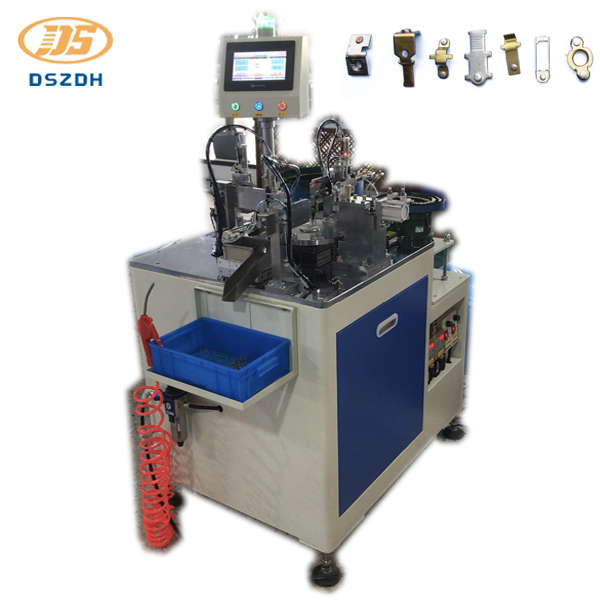
Table of Contents
- What Is an Automatic Riveting Machine?
- How Does an Automatic Riveting Machine Work?
- Core Components of an Automatic Riveting Machine
- Types of Automatic Riveting Machines
- Industrial Applications of Automatic Riveting Machines
- Key Benefits of Using an Automatic Riveting Machine
- Automatic vs Manual Riveting: A Comparison
- How to Choose the Right Automatic Riveting Machine
- Maintenance and Operational Best Practices
- Future Trends in Automatic Riveting Technology
- Frequently Asked Questions (FAQ)
What Is an Automatic Riveting Machine?
An Automatic Riveting Machine is an advanced industrial system designed to join two or more materials together by deforming rivets in a fully or semi-automated process. Unlike manual riveting tools, this equipment integrates mechanical, pneumatic, or hydraulic power with intelligent control systems to deliver consistent riveting results at scale.
In modern manufacturing environments, precision and repeatability are critical. Automatic Riveting Machines ensure that each rivet is installed with the same force, alignment, and cycle time, minimizing defects and maximizing throughput.
According to industry references such as Automatic Riveting Machine solutions , these systems are commonly customized to match specific product structures, materials, and production volumes.
How Does an Automatic Riveting Machine Work?
The working principle of an Automatic Riveting Machine revolves around controlled force, precise positioning, and synchronized automation. While designs may vary, the general workflow follows several key steps:
- Parts are automatically positioned using fixtures or robotic feeders.
- Rivets are fed into the riveting head through a vibratory or linear feeder.
- The machine applies a calibrated force to deform the rivet.
- Sensors verify rivet presence, force, and completion.
- The finished assembly is released or transferred to the next process.
This closed-loop process ensures consistent quality while reducing dependency on operator skill. In high-volume manufacturing, such automation is essential for meeting tight production schedules.
Core Components of an Automatic Riveting Machine
Understanding the main components helps manufacturers evaluate performance and reliability. A typical Automatic Riveting Machine includes:
- Riveting Head: Applies force to deform the rivet.
- Feeding System: Automatically supplies rivets.
- Control System: PLC or CNC unit managing cycles.
- Fixture & Clamping Unit: Ensures accurate positioning.
- Sensor System: Monitors force, displacement, and quality.
Companies like Desheng often customize these components to meet unique application requirements, ensuring optimal integration into existing production lines.
Types of Automatic Riveting Machines
| Type | Driving Method | Typical Applications |
|---|---|---|
| Pneumatic Riveting Machine | Compressed Air | Light-duty assemblies |
| Hydraulic Riveting Machine | Hydraulic Pressure | Heavy-duty structural parts |
| Servo Riveting Machine | Servo Motor | High-precision electronic components |
Industrial Applications of Automatic Riveting Machines
Automatic Riveting Machines are widely used across industries such as:
- Automotive manufacturing
- Home appliance assembly
- Electronics and electrical components
- Aerospace and rail transportation
- Sheet metal fabrication
Their adaptability makes them a core technology in modern smart factories.
Key Benefits of Using an Automatic Riveting Machine
- Improved production efficiency
- Consistent rivet quality
- Reduced labor costs
- Enhanced workplace safety
- Data-driven quality control
Automatic vs Manual Riveting: A Comparison
| Aspect | Automatic Riveting Machine | Manual Riveting |
|---|---|---|
| Efficiency | High | Low |
| Consistency | Excellent | Operator-dependent |
| Labor Cost | Lower long-term | Higher |
How to Choose the Right Automatic Riveting Machine
Selecting the right Automatic Riveting Machine depends on factors such as material thickness, rivet type, production volume, and integration requirements. Consulting experienced suppliers like Desheng can significantly reduce implementation risks.
Maintenance and Operational Best Practices
Regular inspection, proper lubrication, and system calibration are essential for maintaining long-term reliability and accuracy.
Future Trends in Automatic Riveting Technology
With the rise of Industry 4.0, Automatic Riveting Machines are increasingly integrated with IoT, AI-based quality inspection, and predictive maintenance systems.
Frequently Asked Questions (FAQ)
Is an Automatic Riveting Machine suitable for small manufacturers?
Yes, modular and semi-automatic solutions make it accessible even for small-scale operations.
Can Automatic Riveting Machines handle different rivet materials?
Most systems support aluminum, steel, and stainless steel rivets with proper configuration.
How long is the typical return on investment?
ROI often ranges from 6 to 18 months depending on production volume.
If you are looking to upgrade your production line with a reliable Automatic Riveting Machine, Desheng offers tailored automation solutions backed by industry expertise. To explore how the right system can transform your manufacturing efficiency, contact us today and speak with our technical specialists.