- English
- 한국어
- Português
- русский
- Français
- 日本語
- Deutsch
- tiếng Việt
- Italiano
- Nederlands
- ภาษาไทย
- Polski
- Svenska
- magyar
- Malay
- বাংলা ভাষার
- Dansk
- Suomi
- हिन्दी
- Pilipino
- Türkçe
- Gaeilge
- العربية
- Indonesia
- Norsk
- تمل
- český
- ελληνικά
- український
- Javanese
- فارسی
- தமிழ்
- తెలుగు
- नेपाली
- Burmese
- български
- ລາວ
- Latine
- Қазақша
- Euskal
- Azərbaycan
- Slovenský jazyk
- Македонски
- Lietuvos
- Eesti Keel
- Română
- Slovenski
- मराठी
- Srpski језик
- Español

How Can a General Automatic Machine Reduce Assembly Bottlenecks Without Forcing a Full Factory Redesign?
Article Summary
Many manufacturers want higher output, steadier quality, and lower labor pressure, but they hesitate because automation can sound like a costly factory overhaul. A General Automatic Machine offers a more practical path. Instead of replacing an entire production line at once, it can automate specific repeatable tasks such as riveting, screw locking, tapping, spring assembly, pin insertion, contact assembly, and other process steps that often slow down manual production. This article explains how buyers can evaluate the right machine type, what pain points it solves, what questions to ask before customization, and how Zhejiang Desheng Intelligent Equipment Tech. Co., Ltd. supports manufacturers that need flexible, application-driven automation equipment.
Table of Contents
- Article Outline
- Why do assembly bottlenecks become so expensive?
- What does a General Automatic Machine actually do?
- Which production tasks are suitable for this type of equipment?
- How should buyers choose the right machine configuration?
- Why does customization matter more than a standard catalog model?
- What practical benefits can manufacturers expect?
- How does manual work compare with automated processing?
- What should a reliable equipment partner provide?
- FAQ
Article Outline
- Identify common production problems that appear before a factory considers automation.
- Explain the role of a General Automatic Machine in targeted process improvement.
- Review common applications, including riveting, screw locking, tapping, and pin insertion.
- Share a practical selection checklist for purchasing teams and production managers.
- Compare manual assembly with automated equipment from the viewpoint of quality, output, training, and traceability.
- Offer useful questions to ask before requesting a customized solution.
- Close with a practical inquiry invitation for buyers planning automation upgrades.
Why do assembly bottlenecks become so expensive?
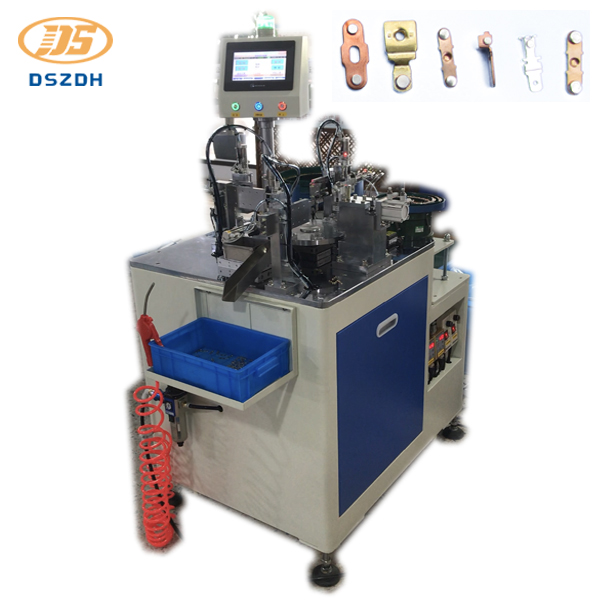
Assembly bottlenecks rarely begin as dramatic production failures. In many factories, they start quietly. One operator takes slightly longer to fix screws. Another worker needs more time to align tiny contacts. A batch of components has small dimensional variation, and suddenly the same process needs repeated checking. At first, the problem looks manageable. After several months, however, the factory may see slower delivery, higher rework, unstable output, and rising pressure on experienced workers.
This is where many purchasing teams begin to look for automation. They are not always trying to build a “fully automatic factory” overnight. More often, they need to remove one painful, repetitive, and quality-sensitive process from manual handling. A General Automatic Machine is valuable because it can focus on a specific operation and make that step more stable before the factory considers larger upgrades.
For production managers, the question is not simply whether automation is modern. The real question is whether a machine can solve a real production constraint without creating new complications. A practical machine should fit the product, match the rhythm of the line, simplify operation, and reduce dependence on individual worker experience.
What does a General Automatic Machine actually do?
A General Automatic Machine is designed to automate common industrial processing or assembly steps that appear across different product categories. Unlike a machine built only for one narrow finished product, this equipment category can cover multiple process needs, such as automatic riveting, automatic screw locking, automatic tapping, automatic pin insertion, spring assembly, contact handling, and other repeatable actions.
The word “general” does not mean the machine is vague or low precision. It means the equipment is process-oriented. The buyer starts from a production action, not only from a product name. For example, if a factory needs to lock screws on plastic housings, rivet metal contacts, insert pins into small components, or tap threaded holes in repeated batches, the machine can be designed around those actions.
Zhejiang Desheng Intelligent Equipment Tech. Co., Ltd. works in the field of intelligent automation equipment, and its General Automatic Machine solutions are suitable for manufacturers that need practical automation support for electrical components, electronics, switch parts, relay-related components, precision assemblies, and similar production tasks.
Buyer-focused note
Before asking for a machine quotation, it is better to define the process clearly. A supplier can give a more accurate proposal when the buyer provides product samples, assembly drawings, expected output, defect concerns, available workshop space, and current manual operation details.
Which production tasks are suitable for this type of equipment?
A General Automatic Machine is most useful when the target process has clear movement, repeatable positioning, measurable quality standards, and enough production volume to justify automation. The equipment may be used as a stand-alone workstation or connected with other machines in a semi-automatic or automatic production line.
- Automatic riveting for contacts, terminals, switch parts, electronic components, and small metal-plastic assemblies.
- Automatic screw locking for products requiring consistent torque, stable screw feeding, and reduced operator fatigue.
- Automatic tapping for repeated threaded-hole processing where manual tapping may cause uneven quality or low output.
- Automatic pin insertion for components that require accurate feeding, positioning, pressing, or inspection.
- Automatic spring assembly for small parts where manual handling is slow, delicate, or inconsistent.
- Integrated assembly and testing when the factory wants to combine processing, detection, counting, and sorting in one workflow.
These applications are common in factories where products are not extremely large, but the assembly steps require patience, accuracy, and repetition. When workers spend long hours on these tasks, mistakes may increase near the end of a shift. Automation helps stabilize the process and allows operators to focus on feeding, monitoring, troubleshooting, and quality management rather than repeating the same motion thousands of times.
How should buyers choose the right machine configuration?
The best machine is not always the most complicated one. A buyer should choose a configuration that solves the current production problem while leaving room for future adjustment. Some factories need a compact single-station machine. Others need a rotary table, vibration bowl feeding, visual inspection, torque monitoring, automatic unloading, or data recording. The right answer depends on the product and the process.
| Selection Factor | Why It Matters | What Buyers Should Prepare |
|---|---|---|
| Product structure | The machine must match the shape, material, tolerance, and assembly direction of the part. | Samples, drawings, photos, and notes about fragile areas. |
| Target output | Cycle time affects machine layout, station quantity, feeding method, and investment level. | Current output, expected output, shift arrangement, and peak season demand. |
| Quality control | Different processes may require torque control, height detection, pressure monitoring, or missing-part inspection. | Known defect types, acceptance standards, and inspection requirements. |
| Workshop space | A machine that looks good on paper still needs to fit real production flow. | Available floor area, operator position, power supply, and material flow direction. |
| Operator skill level | Simple operation reduces training time and helps factories run more consistently. | Preferred interface language, maintenance ability, and operator experience level. |
A useful approach is to start with the painful process first. If screw locking causes many delays, solve screw locking. If riveting creates unstable contact height, solve riveting. If pin insertion depends too much on senior workers, solve pin insertion. A General Automatic Machine becomes more cost-effective when the buyer connects equipment design directly with measurable production issues.
Why does customization matter more than a standard catalog model?
Industrial products often look similar from a distance, but their assembly requirements can be very different. A slight change in contact shape, screw length, hole depth, plastic hardness, pin diameter, or spring elasticity can affect feeding, positioning, pressing force, and final inspection. This is why customization matters.
A standard machine may be enough for simple and stable parts. However, many factories need equipment that reflects their actual product design. Customization can include fixtures, feeding systems, tooling, control logic, inspection modules, safety protection, machine size, and integration with existing production flow. When properly designed, a customized General Automatic Machine can reduce unnecessary manual correction and make the process easier to control.
Buyers should avoid treating customization as a vague extra service. It should be a structured engineering process. The supplier should understand the product, discuss the process, test feasibility, design the mechanism, confirm technical details, and support installation and operation. This is especially important when the machine will be used for electrical parts, precision components, or products with strict consistency requirements.
What practical benefits can manufacturers expect?
The value of a General Automatic Machine should be measured in practical factory language. Buyers care about whether the machine helps them deliver orders, control quality, reduce waste, and manage labor pressure. A well-matched machine can offer several direct improvements.
- More stable output because repeated actions are controlled by mechanical movement, sensors, fixtures, and programmed sequences.
- Lower dependence on manual skill because operators do not need to master every delicate motion by experience alone.
- Reduced rework when the machine includes detection for missing parts, incorrect position, abnormal pressure, or incomplete assembly.
- Better production planning because cycle time becomes easier to estimate compared with fully manual work.
- Improved worker arrangement because employees can shift from repetitive processing to supervision, material handling, quality checking, and maintenance support.
- Cleaner process records when the system is designed to count output, reject defective products, or connect with factory management requirements.
These benefits are especially important for manufacturers facing short delivery schedules, high batch consistency requirements, or difficulty recruiting stable skilled workers. Instead of asking workers to “try harder,” automation gives the factory a more repeatable method.
How does manual work compare with automated processing?
Manual work still has value. It is flexible, easy to start, and useful for small batches or early-stage product testing. The problem appears when manual operation becomes the permanent solution for a process that requires high speed, high consistency, or long-term repeatability. At that point, the factory may pay hidden costs through training, supervision, rework, scrap, and unstable delivery.
| Production Aspect | Manual Operation | General Automatic Machine |
|---|---|---|
| Output consistency | Depends heavily on worker speed, attention, and fatigue level. | Runs according to designed cycle time and mechanical sequence. |
| Quality stability | May vary between operators or shifts. | Can use fixtures, sensors, torque control, pressure control, and inspection modules. |
| Training demand | New workers may need time to reach stable performance. | Operators mainly learn feeding, monitoring, adjustment, and basic troubleshooting. |
| Scalability | Usually requires more people as orders increase. | Can improve capacity through optimized stations, feeding systems, and process layout. |
| Defect prevention | Often relies on visual checking after the problem occurs. | Can detect missing parts, wrong position, abnormal movement, or incomplete processing during operation. |
The goal is not to remove people from production. The better goal is to remove the most repetitive and unstable manual tasks from the production line, so people can manage the process more intelligently. This is where a General Automatic Machine can create visible value.
What should a reliable equipment partner provide?
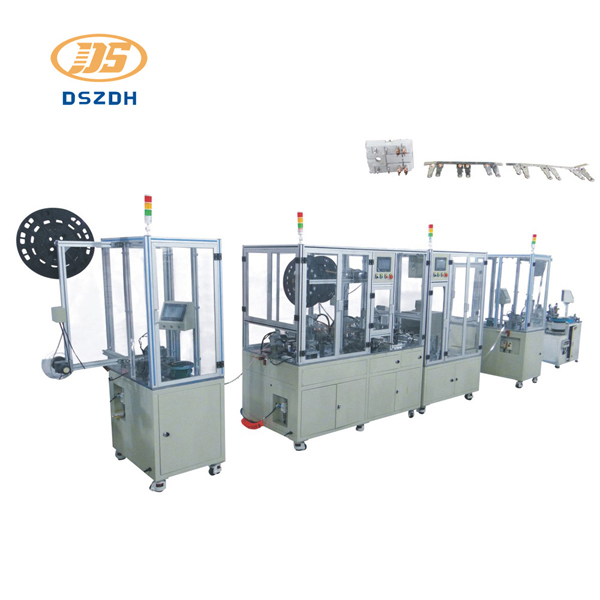
A reliable supplier should not only sell a machine. The supplier should help the buyer clarify the process, reduce technical uncertainty, and make sure the final equipment is practical for daily use. For many factories, the first automation project is also a learning process. Clear communication matters as much as machine hardware.
Zhejiang Desheng Intelligent Equipment Tech. Co., Ltd. can support manufacturers by discussing product characteristics, process requirements, customization direction, and suitable equipment options. When buyers evaluate a General Automatic Machine, they should look for a partner that can understand both engineering details and production pressure.
- Does the supplier ask detailed questions about your product and process?
- Can the supplier explain the machine workflow in a way your production team understands?
- Can fixtures, feeding systems, tooling, and inspection functions be designed for your parts?
- Does the proposal mention cycle time, operation method, safety, maintenance, and after-sales support?
- Can the supplier provide a realistic solution instead of pushing the most expensive configuration?
Buyers should also prepare internal information before contacting a supplier. Useful materials include product samples, current manual process videos, defect photos, production targets, and workshop layout. These details help the supplier design equipment that fits real working conditions rather than theoretical assumptions.
FAQ
Is a General Automatic Machine suitable for small and medium-sized factories?
Yes, if the factory has a repeatable process with enough production demand. Many small and medium-sized manufacturers start with one key process, such as riveting, screw locking, tapping, or pin insertion, instead of automating the whole line at once.
Do I need to redesign my product before using automated equipment?
Not always. In many cases, the machine can be designed around the existing product. However, if the part structure creates feeding or positioning problems, the supplier may suggest small design adjustments to improve automation stability.
What information should I provide before requesting a quotation?
You should provide product drawings, samples, photos, expected output, current manual process details, quality issues, available workshop space, and any inspection requirements. The more accurate the information is, the more practical the proposal will be.
Can one machine handle different product models?
It depends on the difference between the models. If the size and structure are similar, the machine may use replaceable fixtures or adjustable tooling. If the models are very different, separate stations or different equipment may be more reliable.
How can automation reduce defects?
A machine can control motion, position, force, torque, sequence, and detection more consistently than manual operation. It can also reject abnormal products during the process when inspection functions are included.
Is the cheapest machine the best choice?
Usually not. A low-cost machine that cannot match the product or process may create more downtime and adjustment problems. The better choice is equipment that solves the real bottleneck with a balanced configuration.
Ready to improve a difficult assembly process?
If your production team is dealing with unstable manual assembly, slow output, repeated rework, or rising labor pressure, a customized General Automatic Machine may be a practical next step. Zhejiang Desheng Intelligent Equipment Tech. Co., Ltd. can help review your product samples, process goals, and automation requirements to recommend a suitable solution. To discuss your project, share your production challenge, or request a tailored equipment proposal, please contact us today.