- English
- 한국어
- Português
- русский
- Français
- 日本語
- Deutsch
- tiếng Việt
- Italiano
- Nederlands
- ภาษาไทย
- Polski
- Svenska
- magyar
- Malay
- বাংলা ভাষার
- Dansk
- Suomi
- हिन्दी
- Pilipino
- Türkçe
- Gaeilge
- العربية
- Indonesia
- Norsk
- تمل
- český
- ελληνικά
- український
- Javanese
- فارسی
- தமிழ்
- తెలుగు
- नेपाली
- Burmese
- български
- ລາວ
- Latine
- Қазақша
- Euskal
- Azərbaycan
- Slovenský jazyk
- Македонски
- Lietuvos
- Eesti Keel
- Română
- Slovenski
- मराठी
- Srpski језик
- Español

Why Invest in Relay Automatic Assembly Equipment?
For relay manufacturers, the pressure rarely comes from one single problem. It usually arrives as a chain reaction: labor cost keeps rising, product consistency becomes harder to maintain, quality checks take too long, delivery dates get tighter, and every extra manual step creates one more chance for error. That is exactly why Relay Automatic Assembly Equipment is no longer viewed as a nice upgrade. It has become a practical answer to production bottlenecks that directly affect margin, output stability, and customer trust.
In real factory environments, managers are not simply looking for a machine that can assemble relays. They want a system that can feed parts steadily, reduce operator dependence, improve yield, simplify inspection, and support future model changes without forcing a full production reset. This article breaks down where the pain points come from, what an automation solution should actually solve, and how companies such as Zhejiang Desheng Intelligent Equipment Tech. Co., Ltd. fit into that conversation when manufacturers need a more reliable assembly approach.
Article Summary
This article explores the practical value of Relay Automatic Assembly Equipment for manufacturers facing unstable output, quality variation, labor dependency, and rising operational pressure. It explains where manual assembly loses efficiency, what functions matter most in a modern line, how to evaluate return on investment, and why customization often matters more than off-the-shelf promises. You will also find a structured outline, a jump-link table of contents, a comparison table, and a FAQ section designed to answer the questions buyers usually ask before making a decision.
Table of Contents
- Outline
- What Problems Does Manual Relay Assembly Create?
- What Should Relay Automatic Assembly Equipment Actually Do?
- How Does Automation Change Daily Factory Performance?
- How Does Manual Production Compare With Automated Assembly?
- What Should Buyers Check Before Choosing a Supplier?
- How Can a Factory Introduce Automation Without Disrupting Production?
- FAQ
- Final Thoughts
Outline
- Why manual relay assembly becomes expensive even when the labor cost looks manageable on paper
- How Relay Automatic Assembly Equipment reduces inconsistency across feeding, positioning, riveting, inspection, marking, and unloading
- Which technical and operational features matter most when choosing equipment
- Why the best solution is often a customized line rather than a generic machine
- How to estimate production impact through output stability, defect reduction, and manpower optimization
- What questions buyers should ask suppliers before approving a project
- How to move from manual or semi-automatic production to a more controlled assembly process
What Problems Does Manual Relay Assembly Create?
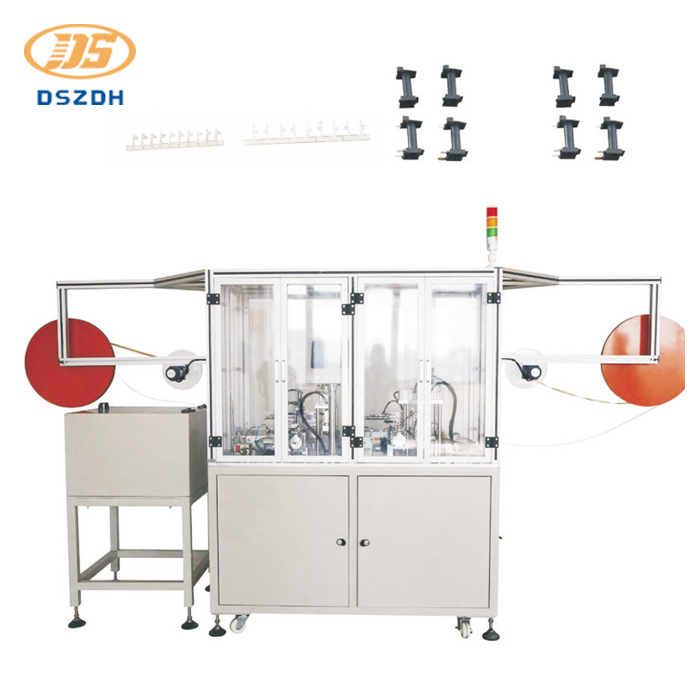
Manual relay assembly looks flexible at first. Operators can adjust quickly, supervisors can visually monitor work, and the initial investment stays low. But once production volume grows, the hidden cost becomes obvious. Small inconsistencies in insertion force, part orientation, riveting pressure, contact placement, and shell fitting begin to accumulate. At that point, the line is no longer limited by machine capacity. It is limited by human fatigue, speed variation, and inspection lag.
Relay products depend on repeatability. A tiny assembly deviation can affect contact reliability, electrical performance, fit accuracy, or downstream testing results. When the line relies too heavily on manual actions, even strong workers and experienced technicians cannot maintain the same pace and precision through every shift. Output may still look acceptable in quantity, but the hidden cost appears in rework, sorting, delayed shipments, and field complaints.
Common Pain Points in Manual or Semi-Manual Relay Production
- Frequent assembly variation between shifts or operators
- Difficulty maintaining stable takt time during peak orders
- High training pressure for new workers on detailed operations
- Slow defect discovery because problems are found after later-stage inspection
- Material feeding interruptions that stop the line unexpectedly
- Rising labor cost without a matching increase in stable output
- More management effort spent on correction instead of optimization
This is where Relay Automatic Assembly Equipment becomes a manufacturing tool rather than just a machine purchase. The goal is not simply to replace hands. The goal is to create a controlled process where feeding, positioning, fastening, checking, and output all follow a defined standard every time.
What Should Relay Automatic Assembly Equipment Actually Do?
Buyers sometimes focus too much on speed and not enough on process logic. A fast line is only valuable when it stays stable, easy to maintain, and suitable for the product itself. Effective Relay Automatic Assembly Equipment should support the entire assembly rhythm, not just one isolated step.
In practical terms, a strong system should handle part feeding, orientation control, component insertion, connection or riveting steps, inspection points, product separation, and collection. Depending on the relay type, it may also need marking, counting, dust control, or data-linked quality checks. What matters is not how many features a supplier lists, but whether those features solve real production friction.
Key Functions Buyers Usually Need
| Function | Why It Matters | What Buyers Should Watch For |
|---|---|---|
| Automatic Feeding | Keeps cycle time stable and reduces operator intervention | Feeding accuracy, jam prevention, easy refill design |
| Precision Assembly | Improves consistency of pins, reeds, shells, and small parts | Repeatability, tooling stability, positioning accuracy |
| Inline Inspection | Finds issues before defective products move forward | Presence detection, misassembly alarms, pass/fail separation |
| Automatic Counting and Collection | Reduces downstream handling confusion and labor waste | Orderly discharge, lot control, collection compatibility |
| Flexible Changeover | Supports different relay models without excessive downtime | Tooling change difficulty, parameter storage, adjustment speed |
| Operator-Friendly Control | Makes daily operation and troubleshooting easier | Clear interface, alarm logic, maintenance accessibility |
A buyer should never ask only, “How fast is the machine?” A better question is, “How stable is the machine after eight hours, two shifts, multiple part batches, and real operator use?”
How Does Automation Change Daily Factory Performance?
The impact of Relay Automatic Assembly Equipment is easiest to understand when viewed through daily operations. A well-designed line improves more than output numbers. It changes the rhythm of production management. Supervisors spend less time solving preventable assembly mistakes. Operators shift from repetitive handwork to monitoring and replenishment. Quality teams see fewer random defects and more traceable patterns. Delivery planning becomes easier because output is more predictable.
That predictability matters. Many relay manufacturers do not lose business because they cannot produce. They lose business because they cannot produce steadily. One week looks strong, the next week collapses under rework, staff turnover, or uneven component quality. Automation does not remove every variable, but it reduces the number of variables that come from manual handling.
Typical Business Benefits
- More consistent output per shift
- Lower dependence on highly experienced manual operators
- Reduced assembly defects caused by fatigue or inconsistent technique
- Better coordination between assembly, testing, and packaging stages
- Clearer maintenance and process optimization opportunities through standardization
- More confidence when scaling from small orders to repeat larger volumes
For factories handling growing demand, the real value is often operational calm. When the assembly stage becomes more controlled, everything around it becomes easier to manage.
How Does Manual Production Compare With Automated Assembly?
Manual vs Automated Relay Assembly
| Area | Manual or Semi-Manual Setup | Relay Automatic Assembly Equipment |
|---|---|---|
| Output Stability | Varies by operator skill, fatigue, and attendance | More consistent cycle performance under defined settings |
| Quality Consistency | Higher risk of variation across shifts | Better repeatability through controlled motion and inspection |
| Labor Dependence | High dependence on training and manual discipline | Lower direct manual intervention in core assembly steps |
| Defect Detection | Often delayed to later inspection | More opportunities for in-process detection and sorting |
| Scalability | Difficult to expand quickly without hiring pressure | Easier to support larger and more stable order flow |
| Management Load | Heavy supervision needed for consistency | More standardized process control |
This comparison explains why manufacturers usually start searching for Relay Automatic Assembly Equipment after repeated production friction, not before. The trigger is rarely abstract. It is usually a very specific problem: rising rejection rate, difficult staffing, unstable delivery, or customer complaints about inconsistency.
What Should Buyers Check Before Choosing a Supplier?
Not every automation supplier is the right fit for relay production. Some companies are strong in general-purpose equipment but weak in part behavior, precision feeding, or compact electrical assembly logic. Buyers should look beyond catalog language and ask how deeply the supplier understands the product, the process, and the production target.
A supplier should be able to discuss not only machine configuration, but also failure risks, changeover expectations, inspection strategy, and service responsiveness. That is especially important when the relay model includes small, sensitive, or easily misaligned parts.
A Better Supplier Evaluation Checklist
- Do they understand relay-specific assembly steps, not just generic automation language?
- Can they customize the line around your product structure and target output?
- Have they considered inspection, rejection logic, and material flow together?
- Can they explain maintenance access and routine wear-part replacement clearly?
- Do they communicate realistically about output, not just ideal speed?
- Can they support future model changes or line upgrades?
This is one reason manufacturers pay attention to companies like Zhejiang Desheng Intelligent Equipment Tech. Co., Ltd.. When a supplier is positioned around intelligent assembly solutions rather than a one-size-fits-all machine catalog, the conversation tends to be more practical, especially for customers who need tailored production logic instead of generic promises.
How Can a Factory Introduce Automation Without Disrupting Production?
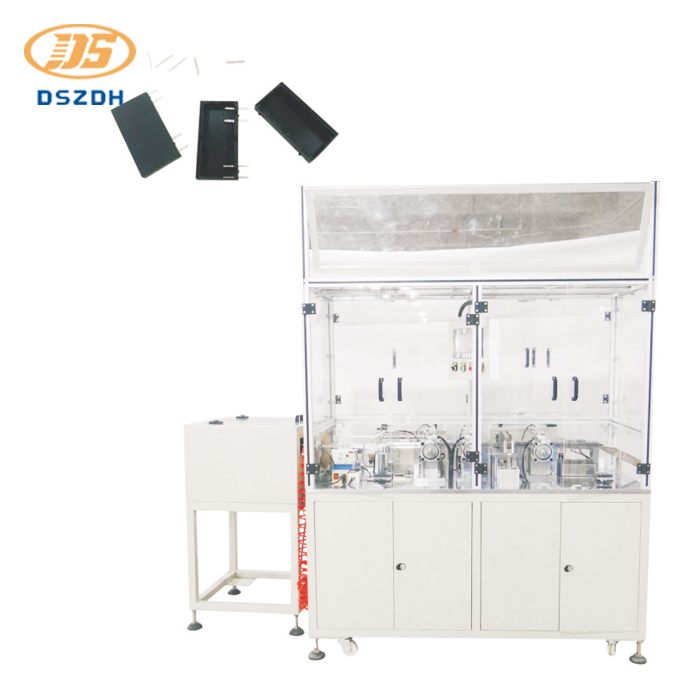
One of the biggest buyer concerns is transition risk. Managers worry that introducing Relay Automatic Assembly Equipment could interrupt delivery, confuse workers, or create a long debugging period. That concern is reasonable, but it becomes manageable when the implementation plan is staged properly.
The best rollout is rarely “remove everything and replace it overnight.” A more realistic path is to define the highest-friction process first, build the solution around that step or line, verify output and defect trends, then expand the automation logic into adjacent stages as confidence grows.
A Practical Introduction Path
- Map the current assembly steps and identify the most unstable or labor-heavy stage
- Clarify relay type, target speed, inspection requirements, and expected product variation
- Confirm which processes should be automated first and which can remain manual temporarily
- Test the line with real parts and real production conditions, not only ideal samples
- Train operators and maintenance staff on daily handling, alarms, and changeover
- Track output, defect rate, stoppage causes, and labor savings after launch
Automation works best when it is treated as a process project, not just an equipment delivery. That mindset helps factories avoid disappointment and get real value from the system.
FAQ
Is Relay Automatic Assembly Equipment suitable for small and mid-sized factories?
Yes, especially when the factory struggles with labor fluctuation, repeated quality issues, or tight delivery schedules. The value does not depend only on factory size. It depends on whether production pain points are recurring and expensive enough to justify a more controlled process.
Can one machine handle different relay models?
In many cases, yes, but the answer depends on the structural difference between products. Some lines support model switching through tooling and parameter changes, while others are optimized for a narrower product range. Buyers should ask about changeover time and flexibility early in the discussion.
Will automation completely remove manual work?
Usually not. The better goal is to reduce repetitive, error-prone, and precision-sensitive manual tasks. Operators still play an important role in replenishment, supervision, basic adjustment, and quality confirmation.
How should buyers judge whether the investment is worthwhile?
Look at the full production picture: yield stability, labor dependency, hidden rework cost, customer complaint risk, output consistency, and management pressure. The most convincing return often comes from fewer disruptions and more reliable delivery, not from speed alone.
Why is customization so important in relay assembly automation?
Because relay structures, component tolerances, feeding behavior, and process priorities vary. A machine that looks impressive in a brochure may still underperform if it was not built around the actual product and production target.
Final Thoughts
Choosing Relay Automatic Assembly Equipment is really a decision about how you want your factory to operate in the coming years. If your team is facing unstable assembly quality, rising labor dependence, and increasing delivery pressure, staying with the same process may cost more than changing it. A better line does not just assemble parts faster. It helps you build a production environment that is steadier, easier to manage, and more prepared for growth.
If you are evaluating the next step for your relay production, this is the right time to compare your current bottlenecks with a more structured automation solution. Zhejiang Desheng Intelligent Equipment Tech. Co., Ltd. can help you explore a practical path based on your product type, process needs, and output goals. If you want to discuss a tailored solution for your factory, contact us today and start the conversation with a team that understands how production problems should be solved in the real world.
Previous:No News