- English
- 한국어
- Português
- русский
- Français
- 日本語
- Deutsch
- tiếng Việt
- Italiano
- Nederlands
- ภาษาไทย
- Polski
- Svenska
- magyar
- Malay
- বাংলা ভাষার
- Dansk
- Suomi
- हिन्दी
- Pilipino
- Türkçe
- Gaeilge
- العربية
- Indonesia
- Norsk
- تمل
- český
- ελληνικά
- український
- Javanese
- فارسی
- தமிழ்
- తెలుగు
- नेपाली
- Burmese
- български
- ລາວ
- Latine
- Қазақша
- Euskal
- Azərbaycan
- Slovenský jazyk
- Македонски
- Lietuvos
- Eesti Keel
- Română
- Slovenski
- मराठी
- Srpski језик
- Español

What Makes an Automatic Assembly Machine Worth the Investment?
Article Summary: For manufacturers under pressure to increase output, stabilize quality, reduce labor dependence, and improve production visibility, an Automatic Assembly Machine can become more than a piece of equipment. It can reshape how a factory handles repetitive assembly, inspection, counting, rejection, and process control. This article explains how to evaluate automatic assembly solutions from a practical buyer’s perspective, what problems they solve, which technical details deserve attention, and how companies can choose a reliable automation partner such as Zhejiang Desheng Intelligent Equipment Tech. Co., Ltd. for customized assembly equipment.
Table of Contents
- Article Outline
- Why Do Manufacturers Struggle With Manual Assembly?
- What Value Does an Automatic Assembly Machine Bring?
- Which Production Lines Can Benefit From Automatic Assembly?
- What Features Should Buyers Compare Before Ordering?
- How Does Customization Affect Real Production Results?
- Why Does Supplier Experience Matter?
- How Should Buyers Select the Right Machine?
- FAQ About Automatic Assembly Machine
- Final Thoughts
Article Outline
This article is designed for production managers, purchasing teams, factory owners, and engineers who are considering whether an Automatic Assembly Machine is a practical investment. Instead of only describing machinery in general terms, the content focuses on real manufacturing concerns: labor shortage, unstable output, quality variation, inspection accuracy, machine compatibility, return on investment, and after-sales support.
- Understanding the hidden cost of manual assembly
- Explaining how automatic assembly improves production consistency
- Comparing key machine functions such as feeding, assembly, testing, counting, and alarm stop
- Identifying suitable industries and application scenarios
- Providing a practical selection checklist for buyers
- Answering common questions before procurement
Why Do Manufacturers Struggle With Manual Assembly?
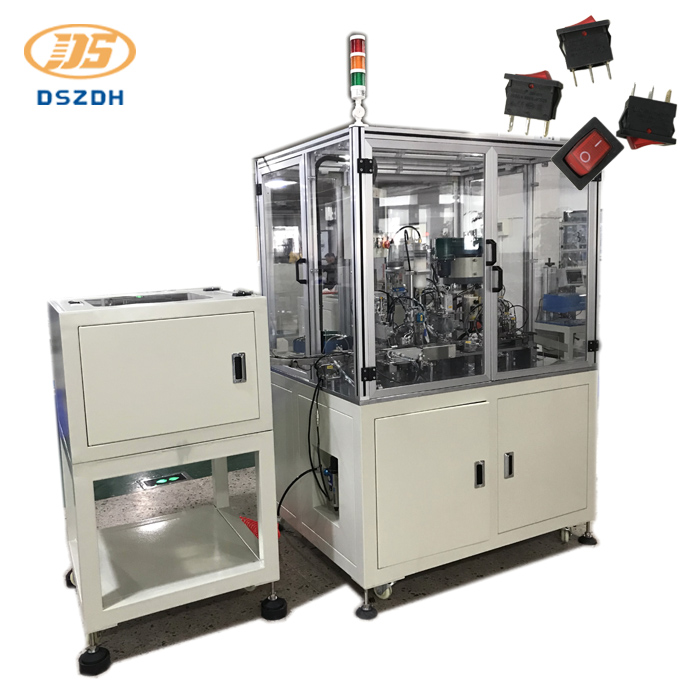
Manual assembly may look flexible at first, especially for factories with small orders or simple products. However, once production volume grows, the weaknesses become hard to ignore. Workers may assemble parts at different speeds, small components may be misplaced, testing may depend too much on human attention, and shift changes can lead to inconsistent output. These problems rarely appear as one dramatic failure. They usually show up as slow delivery, repeated rework, quality complaints, and rising labor costs.
In industries such as electrical switches, sockets, relays, precision electronics, automotive components, and low-voltage electrical products, assembly often involves small parts, repeated positioning, pressing, riveting, pin insertion, screw locking, continuity testing, or high-voltage testing. A single missed step can affect the performance or safety of the final product. This is why many manufacturers begin looking for an Automatic Assembly Machine when their manual line can no longer keep pace with order demand.
Another pain point is training. Skilled assembly workers take time to develop, but production schedules do not always wait. When staff turnover is high, quality control becomes more difficult. Automation does not remove the need for people; it changes their role. Instead of repeating the same movement thousands of times, operators can focus on monitoring, adjustment, maintenance, material preparation, and quality management.
Practical insight: The real cost of manual assembly is not only wages. It also includes rework, scrap, unstable quality, missed delivery dates, training time, and limited production visibility.
What Value Does an Automatic Assembly Machine Bring?
An Automatic Assembly Machine is designed to connect multiple production actions into a controlled process. Depending on the product structure, it may include automatic feeding, orientation, positioning, assembly, pressing, riveting, screw fastening, pin inserting, inspection, counting, sorting, and rejection of defective parts. When these actions are integrated properly, the production line becomes more predictable.
The most direct value is output stability. A well-designed machine can repeat the same movement with consistent speed and accuracy. This helps factories plan delivery schedules more confidently. For buyers who supply large brands or overseas customers, stable delivery is not a small advantage. It is often the difference between becoming a long-term supplier and losing future orders.
Quality control is another major reason manufacturers invest in automation. When detection systems are added to the assembly process, the machine can identify missing parts, wrong positioning, assembly failure, electrical faults, or other abnormal conditions. Some machines can stop automatically when an issue appears, reducing the chance of defective products moving to the next stage.
| Production Challenge | How an Automatic Assembly Machine Helps | Business Impact |
|---|---|---|
| Unstable manual output | Repeats assembly actions with controlled speed and sequence | Improves delivery planning and production capacity |
| High labor dependence | Reduces repetitive manual operations and simplifies line management | Helps control long-term operating costs |
| Quality variation | Integrates detection, testing, alarm stop, and defective product rejection | Reduces rework, complaints, and hidden quality risks |
| Difficult production tracking | Uses counting, touch screen settings, and process control functions | Makes output management clearer and easier to review |
| Product structure complexity | Uses customized mechanisms based on real components and assembly steps | Improves compatibility with actual manufacturing needs |
Which Production Lines Can Benefit From Automatic Assembly?
Not every product needs the same automation solution. A simple product may only require feeding and pressing, while a complex electrical component may require multi-station assembly and testing. The best use case for an Automatic Assembly Machine is a product with repeated assembly steps, stable demand, and clear quality requirements.
Many manufacturers use automatic assembly equipment for products such as wall switches, rocker switches, micro switches, plugs, sockets, relays, spool valves, auto parts, and precision electronic components. These products often involve small parts that must be placed accurately. They may also require electrical testing or mechanical performance checks before packaging.
For example, a switch assembly line may need to feed plastic bases, metal contacts, springs, buttons, pins, and covers. The process may also need on-off testing, high-voltage testing, counting, and defective product removal. If all of this depends only on manual work, the risk of missed parts or inconsistent assembly becomes much higher. A customized automatic solution can help turn these scattered steps into one smooth production flow.
- Electrical switch and socket assembly
- Relay component assembly
- Low-voltage electrical product assembly
- Precision electronics assembly
- Automotive component assembly
- Pin insertion, riveting, screw locking, and testing processes
- Customized assembly lines for special product structures
What Features Should Buyers Compare Before Ordering?
Buying an Automatic Assembly Machine is not like buying a standard tool from a catalog. The buyer needs to understand whether the machine can handle the real product, real materials, real tolerances, and real production rhythm. A beautiful machine design means little if it cannot run steadily with the customer’s components.
Before confirming a project, buyers should compare several core features. The first is feeding reliability. Small parts are often difficult to orient and feed correctly. If the feeding system is unstable, the entire line becomes unstable. The second is assembly accuracy. The machine must place, press, insert, or lock each part in the correct position. The third is testing capability. For electrical products, functions such as continuity testing and high-voltage testing can be essential.
Control system design also matters. A user-friendly touch screen, clear alarm information, automatic counting, production data display, and easy parameter adjustment can reduce operator mistakes. Safety design should not be ignored either. Guards, emergency stops, abnormal stop functions, and reasonable maintenance access can make daily use safer and more practical.
| Feature | Why It Matters | Buyer’s Question |
|---|---|---|
| Automatic feeding | Keeps parts supplied in the correct direction and rhythm | Can the feeder handle our actual parts with stable performance? |
| Assembly mechanism | Determines positioning accuracy and final product consistency | Is the mechanism designed around our product structure? |
| Detection and testing | Finds missing parts, wrong assembly, or electrical defects | Which quality checks can be integrated into the line? |
| PLC and touch screen control | Makes operation, adjustment, and monitoring easier | Can operators understand alarms and adjust parameters quickly? |
| Automatic alarm stop | Prevents continuous defective production when abnormal issues occur | How does the machine respond to material shortage or assembly failure? |
| Maintenance accessibility | Reduces downtime during cleaning, adjustment, and repair | Can common parts be accessed without complex disassembly? |
How Does Customization Affect Real Production Results?
Customization is one of the most important parts of automatic assembly equipment. Two products may look similar from the outside, but their internal structure, material behavior, tolerance range, and assembly sequence may be completely different. A standard machine may not solve these differences. A customized Automatic Assembly Machine can be designed around the buyer’s actual product drawings, samples, process requirements, expected capacity, testing standards, and workshop conditions.
Good customization starts with communication. The supplier should understand the product structure, assembly order, difficult points, defect history, production target, packaging method, and future product changes. In some cases, the buyer may want a fully automatic line. In other cases, a semi-automatic solution may be more practical because it balances investment cost and production efficiency.
For manufacturers planning long-term production, customization can also improve the return on investment. A machine that matches the product well will usually run more smoothly, require fewer adjustments, and reduce hidden downtime. On the other hand, poor customization can create constant small problems: jamming, misfeeding, unstable testing, difficult maintenance, and operator frustration. These problems can quietly consume the expected savings from automation.
Buyer reminder: A low initial price does not always mean lower total cost. The machine must fit the product, the process, and the factory’s long-term production plan.
Why Does Supplier Experience Matter?
Supplier experience has a direct influence on project success. An automatic assembly project involves mechanical design, electrical control, process engineering, testing logic, parts feeding, debugging, and after-sales support. If the supplier does not understand the industry or product type, the project may suffer from repeated changes and delayed delivery.
Zhejiang Desheng Intelligent Equipment Tech. Co., Ltd. focuses on automatic intelligent equipment and customized automation solutions for industries such as switch socket appliances, relays, low-voltage electrical products, precision electronics, auto parts, and new energy industrial control products. For buyers, this background is valuable because it shows experience with small components, electrical testing requirements, and practical assembly challenges.
A reliable supplier should not only build the machine. It should help the buyer clarify the process, identify possible risks, improve assembly logic, and make the equipment easier to operate. When a supplier has long-term experience with customized automatic equipment, it is more likely to ask the right questions before design begins. That early communication can prevent expensive mistakes later.
Buyers should also pay attention to whether the supplier can provide support after delivery. Training, spare parts guidance, remote communication, technical documents, and troubleshooting response all affect the long-term value of the equipment. A machine is not only an upfront purchase; it becomes part of the factory’s daily production system.
How Should Buyers Select the Right Machine?
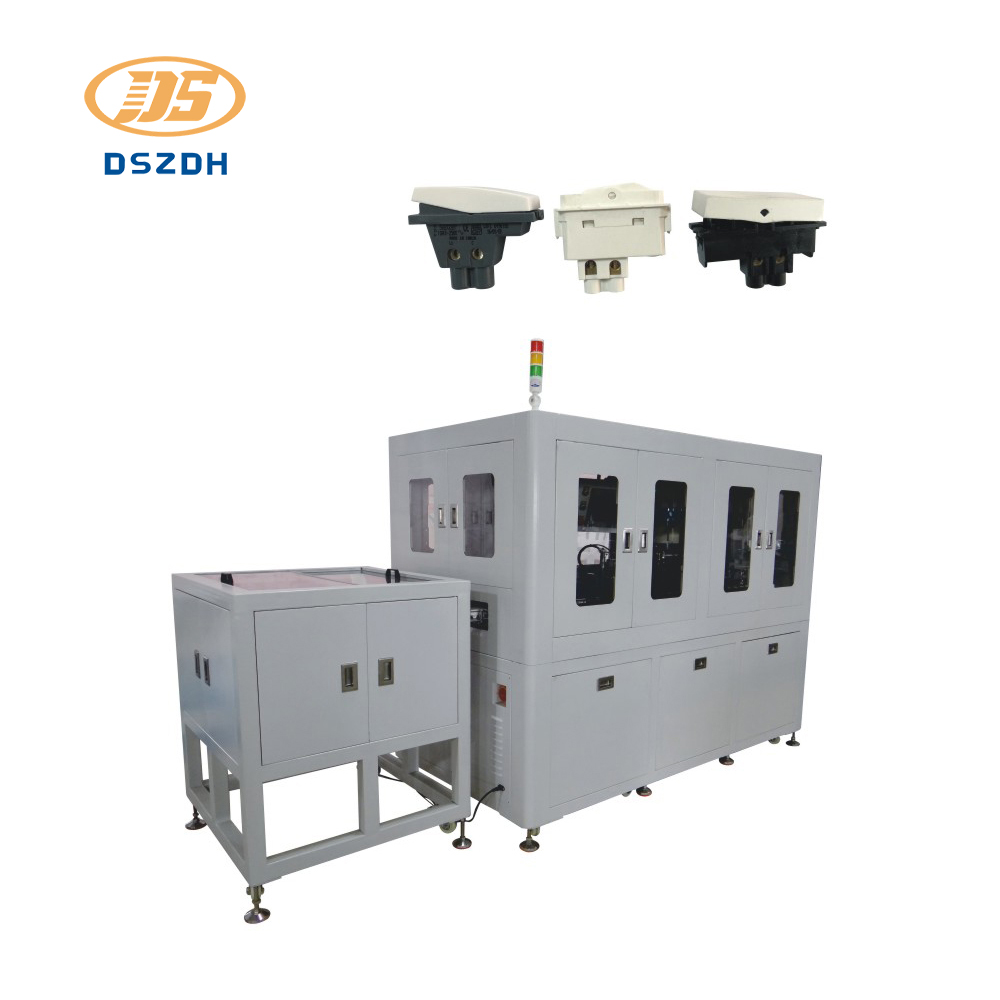
Selecting the right Automatic Assembly Machine requires more than comparing machine photos. Buyers should begin with their own production goals. What output is required per hour? Which defects appear most often? Which steps are slowest? Which parts are difficult to handle? What level of testing is required before shipment? Clear answers help the supplier design a more suitable solution.
It is also important to provide real samples. Product drawings are useful, but actual parts reveal more about material flexibility, burrs, surface condition, dimensional tolerance, and feeding behavior. If the machine must handle multiple models, the buyer should explain the differences between models and whether quick changeover is required.
Before ordering, buyers can use the following checklist:
- Prepare product samples, drawings, and assembly process information.
- Define target capacity, acceptable defect rate, and testing requirements.
- Confirm whether the machine should be fully automatic or semi-automatic.
- Ask how feeding, assembly, inspection, and rejection will be handled.
- Review operation interface, alarm logic, and safety design.
- Discuss future product upgrades or model changes.
- Confirm installation, training, spare parts, and after-sales support.
- Evaluate total production value instead of only comparing purchase price.
A thoughtful selection process helps avoid one of the most common procurement mistakes: buying equipment that looks technically impressive but does not fit daily production. The right solution should make the factory easier to manage, not more complicated.
FAQ About Automatic Assembly Machine
Q1: What is an Automatic Assembly Machine?
An Automatic Assembly Machine is equipment designed to complete repeated assembly steps through mechanical, electrical, pneumatic, control, and testing systems. It can feed parts, position components, assemble products, test functions, count output, and reject defective items according to the production process.
Q2: Is an Automatic Assembly Machine suitable for small components?
Yes. In fact, many automatic assembly projects are used for small components such as switches, sockets, relays, pins, springs, buttons, metal contacts, and precision electronic parts. The key is to design the feeding and positioning system according to the actual part shape and tolerance.
Q3: Do manufacturers need a customized machine?
In most serious production projects, customization is highly recommended. Product structure, assembly order, testing needs, and production speed can vary greatly. A customized machine is more likely to match the real process and deliver stable long-term performance.
Q4: Which information should be provided before requesting a quotation?
Buyers should provide product drawings, samples, assembly steps, target output, testing requirements, defect concerns, available workshop space, power requirements, and whether multiple product models need to be assembled on the same machine.
Q5: Can automatic assembly equipment include testing functions?
Yes. Depending on the product, the machine can include detection and testing functions such as missing part detection, position detection, continuity testing, high-voltage testing, visual inspection, counting, and automatic rejection of defective products.
Q6: How can buyers judge whether the investment is worthwhile?
Buyers should compare labor savings, output increase, quality improvement, reduced rework, lower defect risk, delivery stability, and long-term production planning. The value of automation is usually strongest when the product has stable demand and repeated assembly steps.
Q7: Why choose Zhejiang Desheng Intelligent Equipment Tech. Co., Ltd.?
Zhejiang Desheng Intelligent Equipment Tech. Co., Ltd. has experience in automatic intelligent equipment for switch sockets, relays, low-voltage electrical products, precision electronics, auto parts, and related industries. The company can provide customized automatic assembly solutions based on product structure and production requirements.
Final Thoughts
An Automatic Assembly Machine should not be seen as a simple replacement for manual labor. It is a production decision that affects quality control, delivery confidence, labor planning, process stability, and future competitiveness. For manufacturers facing rising orders, stricter quality expectations, or pressure to reduce repetitive manual work, the right automatic assembly solution can create measurable value across the whole production line.
If your factory is planning to improve assembly efficiency, reduce quality risks, or build a customized automated production process, Zhejiang Desheng Intelligent Equipment Tech. Co., Ltd. can help evaluate your product structure and recommend a practical solution. For machine details, customization options, and project discussion, please contact us to start building an automatic assembly solution that fits your real production needs.