- English
- 한국어
- Português
- русский
- Français
- 日本語
- Deutsch
- tiếng Việt
- Italiano
- Nederlands
- ภาษาไทย
- Polski
- Svenska
- magyar
- Malay
- বাংলা ভাষার
- Dansk
- Suomi
- हिन्दी
- Pilipino
- Türkçe
- Gaeilge
- العربية
- Indonesia
- Norsk
- تمل
- český
- ελληνικά
- український
- Javanese
- فارسی
- தமிழ்
- తెలుగు
- नेपाली
- Burmese
- български
- ລາວ
- Latine
- Қазақша
- Euskal
- Azərbaycan
- Slovenský jazyk
- Македонски
- Lietuvos
- Eesti Keel
- Română
- Slovenski
- मराठी
- Srpski језик
- Español

Why Is Auto Parts Automatic Assembly Equipment Becoming Essential for Modern Manufacturing?
Industry Insight
Article Summary
In automotive manufacturing, small assembly errors can lead to major production delays, unstable quality, and rising labor costs. That is why more factories are rethinking how they build connectors, switches, and other precision components. In this article, I explain how Auto Parts Automatic Assembly Equipment helps manufacturers improve consistency, reduce manual dependence, and scale output without sacrificing process control. I also explore what buyers should examine before choosing a solution, what return they can realistically expect, and why working with an experienced automation partner such as Zhejiang Desheng Intelligent Equipment Tech. Co., Ltd. can make the transition more practical and less risky.
Table of Contents
- What Will This Article Cover?
- Why Are Auto Parts Manufacturers Under So Much Pressure?
- What Can Auto Parts Automatic Assembly Equipment Actually Solve?
- How Does Automated Assembly Compare with Manual Production?
- Which Features Matter Most When Choosing a System?
- Where Can This Equipment Be Applied in Auto Parts Production?
- How Should I Evaluate a Reliable Equipment Supplier?
- What Kind of Business Value Can Buyers Expect?
- Which Common Questions Should Buyers Ask First?
- How Can I Take the Next Step?
Outline
- The production challenges facing modern auto parts manufacturers
- The core advantages of Auto Parts Automatic Assembly Equipment
- A practical comparison between manual and automated assembly
- The key technical and commercial factors buyers should review
- Typical automotive component applications and process scenarios
- How to judge supplier capability, customization strength, and long-term value
- Frequently asked questions from serious equipment buyers
Why Are Auto Parts Manufacturers Under So Much Pressure?
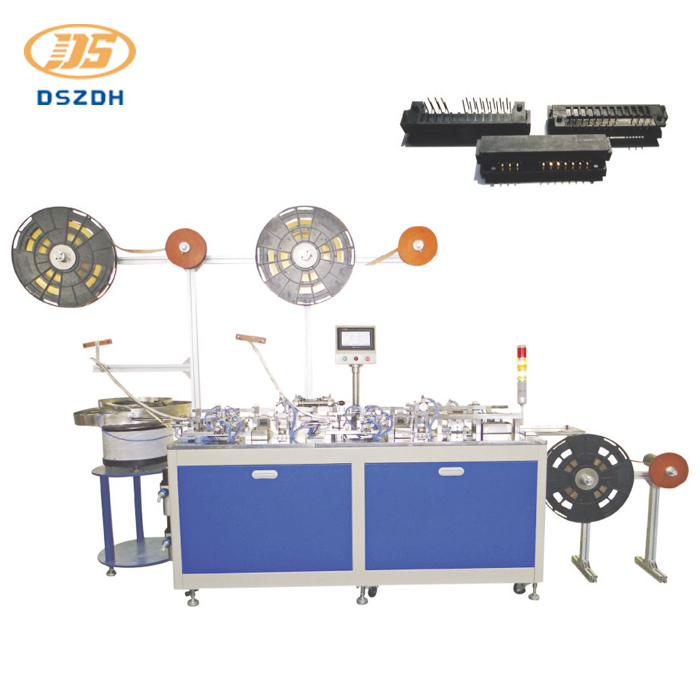
I have noticed that many automotive component factories are facing the same contradiction. On one side, customers demand tighter tolerances, higher output, and more stable delivery schedules. On the other side, labor is more expensive, training cycles are longer, and product structures are becoming more complex. That combination makes traditional assembly methods harder to sustain.
In auto parts production, even a seemingly simple part often involves several linked steps such as feeding, positioning, inserting, bending, fastening, testing, and sorting. If these steps depend too heavily on manual work, factories usually encounter a familiar list of problems: inconsistent assembly accuracy, variable cycle times, rising rework, and difficult quality tracing.
This is exactly where Auto Parts Automatic Assembly Equipment starts to matter. It is not just a machine replacing a worker. It is a structured production method that turns repeated manual actions into a stable, measurable, and controlled process.
For buyers, the real issue is no longer whether automation is interesting. The real question is whether the current production model can still support future orders, stricter customer audits, and growing competition.
Main buyer pain points often include
- Unstable assembly quality across shifts or operators
- High labor dependence for repetitive precision tasks
- Low traceability when defects appear after shipment
- Difficulty increasing output without expanding headcount
- Frequent downtime caused by inconsistent manual handling
What Can Auto Parts Automatic Assembly Equipment Actually Solve?
When I look at the value of Auto Parts Automatic Assembly Equipment, I do not reduce it to speed alone. Speed matters, of course, but most buyers need a more balanced answer. They need to know how automation improves process quality, reduces operational uncertainty, and makes output easier to predict.
A well-designed assembly system can integrate multiple actions into one coordinated workflow. In automotive component production, that may include automatic feeding, orientation correction, pin insertion, bending, assembly confirmation, testing, and discharge. The result is not simply faster production. It is a more repeatable production environment.
That matters because automotive buyers are rarely forgiving. They expect uniformity, documented control, and dependable lead times. If one line performs well only when a specific operator is present, that is not a strong manufacturing model. A more automated process helps standardize output regardless of shift changes or labor turnover.
For factories producing connectors, switch components, or other precision automotive electrical parts, the right equipment can also reduce the hidden cost of inconsistency. Scrap, misassembly, delayed inspections, and customer complaints often cost more than managers realize until they begin tracking them closely.
| Challenge | What Happens in Daily Production | How Automated Assembly Helps |
|---|---|---|
| Human variability | Different operators produce different results under the same process | Standardized motion, controlled timing, and fixed work sequence improve consistency |
| Quality instability | Missed insertions, incorrect positioning, or incomplete assembly appear intermittently | Integrated inspection and process control reduce unnoticed errors |
| Labor intensity | Repeated precision work causes fatigue and slows output over time | Machines take over repetitive high-frequency operations |
| Output bottlenecks | Production capacity depends on the number and skill of workers available | Cycle time becomes more predictable and easier to scale |
| Poor traceability | It is difficult to trace the source of defects after shipment | Structured process design makes control points easier to define and monitor |
How Does Automated Assembly Compare with Manual Production?
I think this comparison is where many buyers gain clarity. Manual assembly is flexible at the beginning, especially for low volume or unstable products. It usually requires less up-front investment, and changes can be made quickly. But once volume grows, precision requirements tighten, or delivery pressure increases, manual processes often become expensive in ways that are not obvious on the surface.
By contrast, Auto Parts Automatic Assembly Equipment is built for repeatability. It does require careful planning, fixture design, process matching, and supplier cooperation. But when those pieces are handled properly, the payoff shows up in cycle stability, defect reduction, and capacity planning.
| Production Factor | Manual Assembly | Automatic Assembly Equipment |
|---|---|---|
| Consistency | Strongly influenced by operator skill and fatigue | More stable process execution from cycle to cycle |
| Scalability | Usually requires more labor to increase output | Better suited to volume growth and repeat orders |
| Quality control | Relies heavily on in-process attention and final checks | Can combine assembly with in-line detection and verification |
| Training burden | Continuous training needed due to turnover and skill gaps | More dependent on setup, maintenance, and process engineering |
| Long-term operating cost | May increase steadily as labor costs and defects rise | Often more favorable once production is stable and recurring |
That said, the smart move is not to automate blindly. The smart move is to identify the specific assembly steps that generate the highest cost, the highest defect risk, or the greatest production delay. Buyers who approach automation that way usually make better decisions than those who chase equipment simply because competitors are doing it.
Which Features Matter Most When Choosing a System?
I always think buyers should move past generic claims and ask what the machine really does in production. A serious supplier should be able to explain process flow, customization logic, control points, and how the equipment matches your part structure instead of offering a vague promise of efficiency.
For automotive parts, the most useful systems are usually the ones designed around real production details. These may include part feeding behavior, orientation requirements, insertion force, bending accuracy, assembly rhythm, product detection logic, and future model compatibility.
If I were screening suppliers, I would focus on the following points:
- Process integration — Can the equipment combine feeding, assembling, forming, and inspection in one line?
- Customization depth — Is the solution designed around my product, or is it just a standard machine adjusted at the edges?
- Stability and maintainability — How easy is it to keep the line running and troubleshoot faults?
- Inspection capability — Does the system include detection to catch defects before they move downstream?
- Upgrade potential — Can the line adapt if part design, output targets, or product families change later?
This is one reason companies with long-term automation experience stand out. Zhejiang Desheng Intelligent Equipment Tech. Co., Ltd. presents itself as a manufacturer focused on customized automation solutions and non-standard automation, which is important in a field where assembly requirements often vary by component design and customer specification.
Where Can This Equipment Be Applied in Auto Parts Production?
A lot of people hear the phrase Auto Parts Automatic Assembly Equipment and imagine one machine for one task. In reality, the value is broader. Automotive parts production includes many component categories where repeated precision actions are critical, especially in electrical and connector-related applications.
Typical scenarios can include connector pin insertion, connector pin bending, integrated bending and insertion, reversing switch assembly, and other structured assembly actions where accuracy and repeatability directly affect product performance.
That application range matters because buyers are often not looking for a single isolated machine. They are looking for a production solution that fits a category of parts, supports stable operation, and can be adapted as product demand evolves.
| Application Area | Typical Process Needs | Why Automation Is Useful |
|---|---|---|
| Automotive connectors | Pin feeding, inserting, bending, alignment, verification | Precision and repeatability are essential for electrical performance |
| Switch components | Multi-step assembly, positioning, fastening, inspection | Helps maintain uniform assembly quality over long runs |
| Electromechanical subassemblies | Structured sequence control and stable cycle time | Reduces variation across operators and production shifts |
| Custom automotive parts | Non-standard handling, tailored fixtures, unique process logic | Supports product-specific automation instead of forcing manual workarounds |
In practical terms, automation is most effective where the process is repetitive enough to standardize and important enough that mistakes are expensive. That combination is common in automotive component manufacturing, which is why so many buyers are now reviewing automation plans more seriously than before.
How Should I Evaluate a Reliable Equipment Supplier?
I believe equipment selection is never just about the machine. It is about the supplier’s ability to understand your product, map your process, and stay useful after delivery. A beautiful quotation means very little if the supplier cannot support debugging, adjustments, or performance optimization once the equipment reaches your factory.
A reliable supplier should be able to discuss not only specifications, but also production logic. They should ask what defect modes you see most often, where your bottleneck sits, what takt time you need, and how your product may change in the next one to three years.
When I assess a potential partner, I usually care about five things:
- Industry familiarity — Do they understand precision automotive or electrical component assembly?
- Engineering capability — Can they design a solution around the actual part and process?
- Customization experience — Have they worked on non-standard automation rather than only catalog machines?
- Support responsiveness — Will they help when real production issues appear?
- Communication clarity — Can they explain what the line will do, what it will not do, and what conditions it needs to succeed?
Zhejiang Desheng Intelligent Equipment Tech. Co., Ltd. is positioned around customized automation, and that is meaningful because auto parts assembly rarely benefits from a one-size-fits-all approach. Buyers usually achieve better outcomes when suppliers are willing to tailor equipment according to product structure and manufacturing requirements rather than forcing a standard template onto a complex process.
What Kind of Business Value Can Buyers Expect?
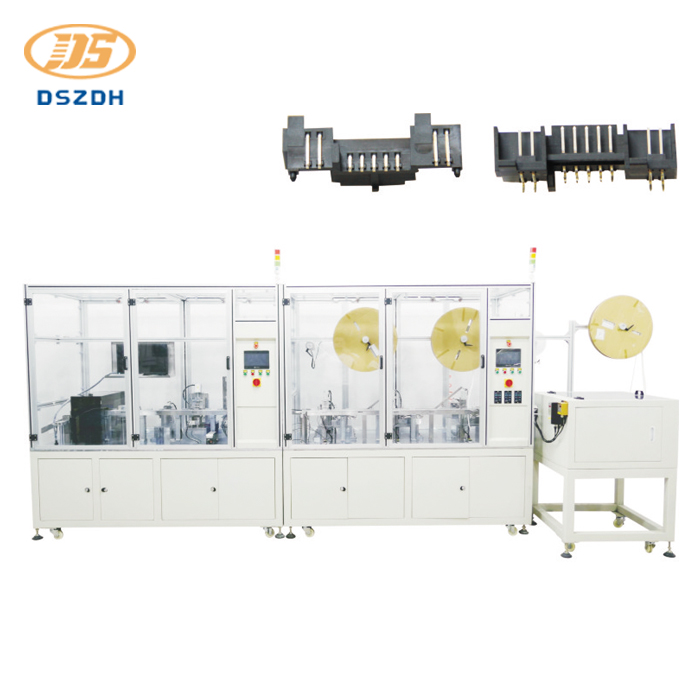
This is the question that matters to decision-makers. If I invest in Auto Parts Automatic Assembly Equipment, what changes beyond the production floor?
The answer usually reaches further than labor reduction. Better assembly control can support more reliable delivery planning. More stable quality can reduce rework and customer complaints. A clearer process can improve internal management and make scaling less chaotic. In industries where buyers audit quality systems carefully, automation can also strengthen the credibility of the manufacturing process itself.
I would summarize the business value like this:
- More predictable output for recurring orders
- Lower dependence on manual precision work
- Improved consistency in assembly-critical dimensions or actions
- Better control over defect risk and inspection flow
- Stronger confidence when pursuing larger or more demanding customers
Of course, return depends on the product, the process, and the quality of the equipment design. But the factories that benefit most are usually the ones that treat automation as a production strategy rather than as a short-term purchasing event.
When the equipment is matched correctly to the application, automation does not simply help a factory produce more. It helps the factory produce with greater discipline, which is often the real advantage in automotive manufacturing.
Which Common Questions Should Buyers Ask First?
Can Auto Parts Automatic Assembly Equipment be customized for my specific product?
Yes, and in many cases it should be. Automotive parts vary widely in shape, tolerance demands, process sequence, and inspection requirements. A supplier with real engineering strength should be able to design around your component rather than forcing your process into a generic machine format.
Is automation only suitable for very large factories?
Not necessarily. Large-volume manufacturers often see faster payback, but medium-sized factories also benefit when they struggle with labor availability, repetitive defects, or delivery pressure. The key is whether the process is stable enough and important enough to justify automation.
What should I prepare before asking for a quotation?
I would prepare product drawings, process flow, current production problems, target output, quality requirements, and any limits on space or utilities. The better your production information is, the more accurately a supplier can design a practical solution.
Will automation eliminate manual work completely?
Usually no. What it does is reduce dependence on repetitive manual assembly and shift labor toward supervision, material loading, quality control, and maintenance. The goal is not always zero labor. The goal is better production control.
How do I know whether a supplier is worth trusting?
Look at whether they understand your part, ask detailed process questions, explain their solution clearly, and show experience with customized automation. A trustworthy supplier focuses on real production performance, not just attractive brochures.
How Can I Take the Next Step?
If you are still relying on labor-heavy assembly for precision automotive components, this is a good time to review where your real bottlenecks are. The right Auto Parts Automatic Assembly Equipment can help you reduce variation, improve throughput, and build a more dependable production model for long-term growth.
If you are comparing automation options for connectors, switches, or other automotive components, Zhejiang Desheng Intelligent Equipment Tech. Co., Ltd. is worth evaluating as a potential partner for customized assembly solutions. A focused discussion about your product structure, output goals, and process pain points can reveal very quickly whether a tailored automation line will make sense for your factory.
Ready to improve your production line with a more stable and efficient assembly solution?
Contact us to discuss your product requirements, production targets, and customization needs. If you are looking for a practical and scalable approach to automotive component automation, now is the right moment to contact us and explore a solution built around your real manufacturing challenges.