- English
- 한국어
- Português
- русский
- Français
- 日本語
- Deutsch
- tiếng Việt
- Italiano
- Nederlands
- ภาษาไทย
- Polski
- Svenska
- magyar
- Malay
- বাংলা ভাষার
- Dansk
- Suomi
- हिन्दी
- Pilipino
- Türkçe
- Gaeilge
- العربية
- Indonesia
- Norsk
- تمل
- český
- ελληνικά
- український
- Javanese
- فارسی
- தமிழ்
- తెలుగు
- नेपाली
- Burmese
- български
- ລາວ
- Latine
- Қазақша
- Euskal
- Azərbaycan
- Slovenský jazyk
- Македонски
- Lietuvos
- Eesti Keel
- Română
- Slovenski
- मराठी
- Srpski језик
- Español

Why Does an Automatic Assembly Machine Matter for Faster and Smarter Production?
Article Summary
Many manufacturers reach a point where manual assembly can no longer keep pace with quality targets, labor pressure, delivery deadlines, and rising customer expectations. An Automatic Assembly Machine becomes valuable at that moment because it helps create a more stable, measurable, and repeatable production process. It can reduce human error, improve consistency, support inspection during assembly, and make daily output easier to plan.
In this article, we explore the real production problems that push companies to adopt automated assembly, how an Automatic Assembly Machine helps solve them, what buyers should evaluate before investing, and how to choose a solution that fits both current production and future expansion. We also explain why a practical, process-driven supplier matters as much as the machine itself.
Table of Contents
- Article Outline
- What Problems Make Manual Assembly Hard to Sustain?
- How Does an Automatic Assembly Machine Improve Operations?
- Where Is an Automatic Assembly Machine Most Useful?
- What Should Buyers Check Before Choosing a Machine?
- Manual Assembly vs Automatic Assembly at a Glance
- How Can You Introduce Automation Without Disrupting Production?
- Why Does the Right Equipment Partner Matter?
- FAQ
- Conclusion
Article Outline
- Production bottlenecks that commonly appear in labor-based assembly lines
- The practical advantages of using an Automatic Assembly Machine
- Industry scenarios where automation creates the strongest return
- Core factors to review before buying or customizing equipment
- A side-by-side comparison of manual and automated assembly
- Implementation tips for a smoother transition
- What to expect from a professional equipment manufacturer
What Problems Make Manual Assembly Hard to Sustain?
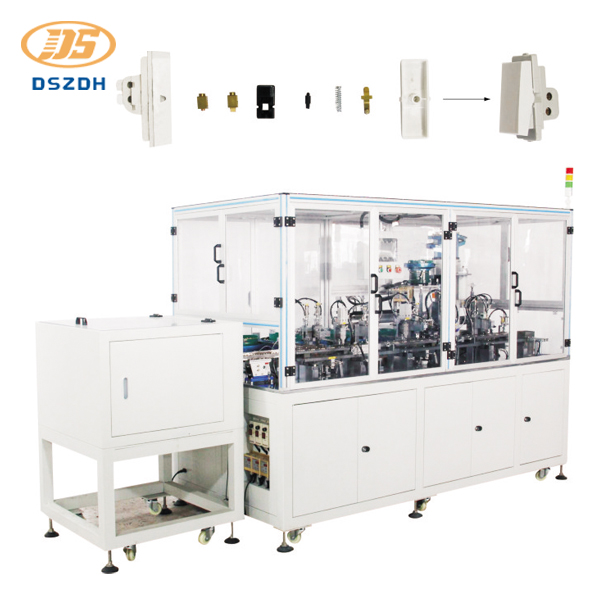
Manual assembly is familiar, flexible, and often easy to start with. But once orders increase or product requirements become more demanding, the same process begins to show its limits. This is where many manufacturers feel pressure from several directions at once.
The first problem is inconsistency. Even skilled workers can produce slight differences over long shifts, especially when a task involves small parts, repeated movements, orientation checks, pressing, fastening, or functional verification. Those small differences can become large quality issues when production volume rises.
The second problem is labor dependence. When production relies heavily on operator speed and experience, output can fluctuate from one team, one shift, or one day to another. Training new workers also takes time, and turnover can quietly weaken efficiency.
The third problem is hidden cost. A line that looks affordable on paper may become expensive once rework, scrap, overtime, missed shipments, and inspection time are added together. For many factories, the real cost of manual assembly is not the wage itself, but the instability built into the process.
Common customer pain points include:
- Unstable daily output and missed delivery schedules
- Quality variation caused by manual handling
- High dependence on skilled operators
- Rising labor and training costs
- Difficult traceability when defects appear
- Limited ability to scale production quickly
These issues are exactly why more manufacturers begin looking for an Automatic Assembly Machine. They do not simply want to replace labor. They want a more controlled production method that reduces uncertainty.
How Does an Automatic Assembly Machine Improve Operations?
An Automatic Assembly Machine improves production by turning repeated assembly steps into a stable sequence. Feeding, positioning, inserting, fastening, pressing, testing, sorting, and counting can be integrated into one coordinated workflow. Instead of depending on each operator to complete those steps in exactly the same way, the process is defined mechanically and monitored consistently.
One of the biggest advantages is repeatability. Once the assembly logic is confirmed, the machine performs the same movement cycle again and again with much smaller variation than a labor-heavy line. That consistency supports better product quality and fewer downstream complaints.
Another advantage is process visibility. With automation, manufacturers can often track output, alarm conditions, reject rates, and cycle performance more clearly. This makes management easier. Problems become easier to identify because the process is structured rather than scattered across multiple manual steps.
An Automatic Assembly Machine can also shorten overall production time by combining assembly with testing or verification. Instead of moving products to separate inspection stations later, the line can check basic functions during the assembly sequence itself. That helps reduce rework and prevents defective units from moving too far downstream.
| Operational Goal | How Automation Supports It |
|---|---|
| Improve consistency | Standardized motion, controlled timing, and repeatable assembly steps reduce variation. |
| Increase output | Continuous cycling and reduced handling time help maintain a steadier production rhythm. |
| Lower defect rates | In-line checking, rejection functions, and accurate positioning reduce common assembly mistakes. |
| Reduce labor pressure | Fewer repetitive manual tasks mean operators can focus on supervision, loading, and quality monitoring. |
| Support future growth | A structured production setup is easier to expand, optimize, or connect with additional equipment later. |
Where Is an Automatic Assembly Machine Most Useful?
The value of an Automatic Assembly Machine becomes especially clear when products include multiple small parts, repeated assembly logic, and quality requirements that cannot depend on operator judgment alone. Electrical components, switches, sockets, relay-related products, precision assemblies, and many consumer or industrial parts fall into this category.
In these environments, a machine is not only assembling. It is protecting process stability. It helps ensure the correct part enters the correct position in the correct sequence. That matters when a single missing spring, misaligned component, loose fastener, or failed test can lead to product failure in the field.
It is also useful when a company has a growing product line and needs more than one assembly approach. Some businesses begin with a standard machine concept and then adapt it for specific products. Others require a customized platform from the start because their assembly path is unique. In both cases, flexibility in design is important.
This is one reason manufacturers often work with experienced automation suppliers such as Zhejiang Desheng Intelligent Equipment Tech. Co., Ltd., especially when they need equipment that fits a specific product structure instead of forcing the product to fit a generic machine idea.
What Should Buyers Check Before Choosing a Machine?
Buying an Automatic Assembly Machine is not only about speed. A fast machine that does not fit your process can create new problems instead of solving old ones. The better approach is to evaluate the equipment from the perspective of your actual production flow.
Start with the product itself. How many parts need to be assembled? Are the parts rigid or delicate? Do they require orientation, pressing force control, screw locking, electrical testing, or visual confirmation? A machine should be selected around these details, not around a vague output promise.
Then look at changeover and maintenance. A machine that works beautifully for one product but becomes difficult to adjust may limit your future flexibility. Buyers should also consider operator training, spare parts support, alarm logic, and the clarity of the control interface.
Key checkpoints before purchase:
- Product structure and part-feeding requirements
- Required cycle time and target output
- Need for in-line detection, testing, or rejection
- Machine stability and ease of operation
- Future product updates or model changes
- Supplier communication, support, and customization ability
A serious supplier should ask detailed process questions instead of rushing straight to a quotation. That is usually a good sign. It shows they understand that automation works best when it is built around the product and production target.
How Does Manual Assembly Compare With an Automatic Assembly Machine?
Manufacturers often compare labor and automation only by initial cost, but that is too narrow. The better comparison includes consistency, scalability, management effort, and defect control. The table below gives a more realistic view.
| Aspect | Manual Assembly | Automatic Assembly Machine |
|---|---|---|
| Process consistency | Depends heavily on worker skill and condition | More stable and repeatable once parameters are set |
| Output stability | Can fluctuate across shifts and teams | Usually easier to predict and manage |
| Defect prevention | Relies on operator attention and later inspection | Can integrate assembly and checking in one flow |
| Scaling capacity | Requires more hiring and training | Supports volume growth with a structured process |
| Management burden | Higher supervision and coordination pressure | More process-led and easier to monitor |
| Long-term efficiency | May decline as complexity grows | Often stronger for repetitive, volume-based production |
This does not mean every manual station should disappear. In fact, a smart production plan may combine selective automation with human oversight. The key is knowing which assembly tasks create the most waste, the most variability, or the most delivery risk. That is where an Automatic Assembly Machine usually creates the clearest value.
How Can You Introduce Automation Without Disrupting Production?
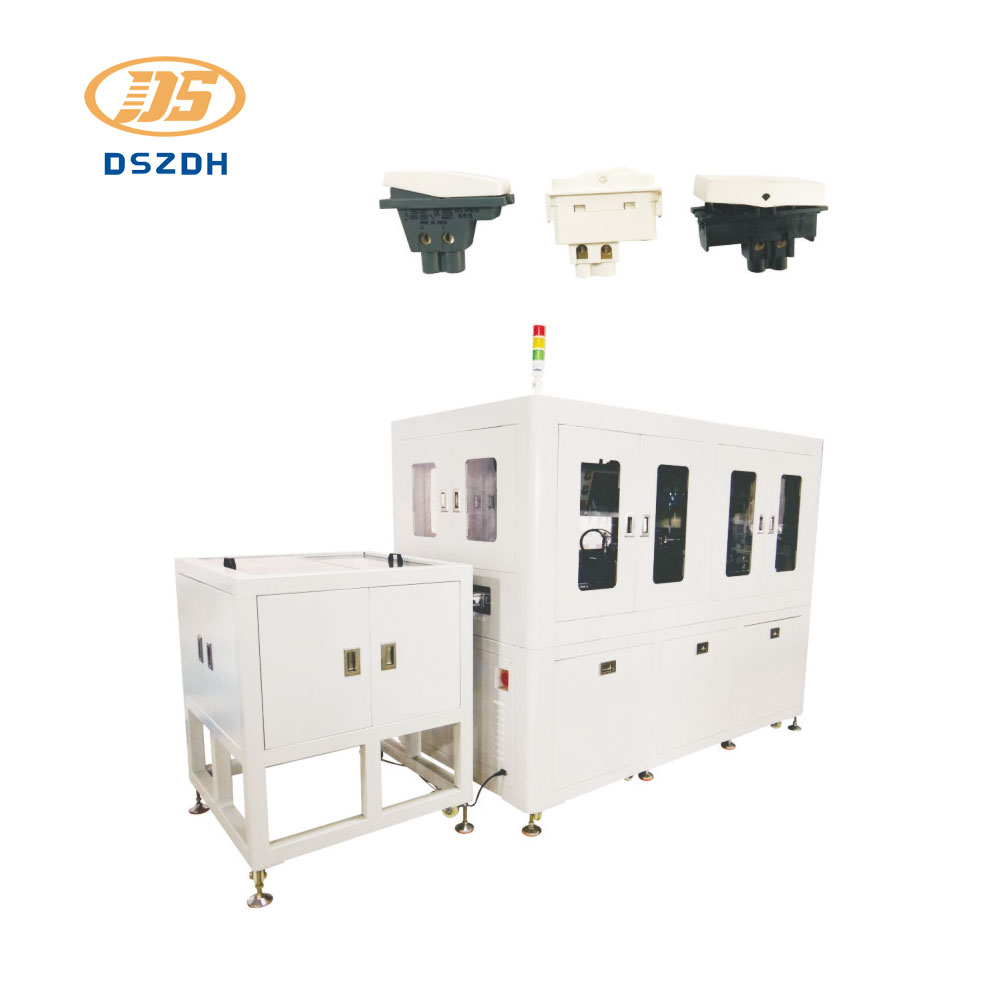
Many buyers worry that automation will interrupt current orders or force a complete line redesign. In practice, implementation becomes much smoother when the project is approached step by step.
First, identify the assembly section that causes the greatest pressure. This could be a bottleneck station, a defect-prone step, or a labor-intensive sequence. Starting there often produces visible results faster than trying to automate everything at once.
Second, define success clearly. Are you trying to increase output, reduce labor dependence, improve pass rate, or combine assembly with inspection? A clear target helps shape machine design and acceptance standards.
Third, prepare your team. Operators and supervisors need to understand what changes, what remains manual, how alarms are handled, and how daily maintenance works. Good automation should simplify management, not create confusion.
Finally, work with a supplier that supports testing, tuning, and follow-up adjustments. Real production always reveals details that drawings alone cannot fully predict. A responsive equipment partner makes that transition far more practical.
Why Does the Right Equipment Partner Matter?
A machine is only part of the decision. The supplier behind it affects everything from design logic to after-sales response. Buyers need a partner that understands part feeding, assembly sequence, inspection integration, control stability, and production reality. That matters even more when the project involves custom requirements.
A professional equipment manufacturer should be able to discuss your product structure in detail, identify possible risks in advance, and propose a realistic solution rather than a generic promise. They should also understand that uptime, maintainability, and process matching matter just as much as speed.
For manufacturers exploring an Automatic Assembly Machine, a company like Zhejiang Desheng Intelligent Equipment Tech. Co., Ltd. can be part of that conversation when the goal is to move from manual pressure toward a more reliable production model. What buyers need most is not flashy language. They need equipment thinking that fits real manufacturing.
FAQ
1. What is the main benefit of an Automatic Assembly Machine?
The main benefit is a more repeatable assembly process. It helps reduce variation, improve output stability, and lower the risk of human error in repetitive production tasks.
2. Is an Automatic Assembly Machine only suitable for large factories?
No. It is valuable for any manufacturer facing repeated assembly work, unstable quality, labor pressure, or scaling challenges. The right solution depends on product complexity and production goals, not only on company size.
3. Can one machine handle assembly and testing together?
In many cases, yes. Depending on the application, a machine can combine assembly with functions such as detection, sorting, counting, or basic performance checks to improve process control.
4. How do I know whether I need a standard or customized machine?
If your product structure is simple and close to common applications, a standard concept may work. If your part geometry, sequence, or testing requirements are special, a customized solution is usually the better choice.
5. What should I prepare before talking to a machine supplier?
You should prepare product drawings, part samples, expected output, defect concerns, available workshop space, and any testing or sorting requirements. The clearer your process details are, the more accurate the equipment proposal will be.
What Makes This Investment Worth Serious Consideration?
An Automatic Assembly Machine is not simply a production upgrade. It is a way to build more confidence into daily manufacturing. When quality drift, labor pressure, slow output, and rework begin to hold a business back, automation offers a more stable path forward. The real advantage is not only speed. It is process control, consistency, and the ability to grow without letting complexity take over the line.
If your factory is ready to reduce manual bottlenecks and move toward a more dependable assembly process, now is a good time to evaluate a solution built around your actual product needs. To discuss your project, machine requirements, or customization goals, contact us and explore how Zhejiang Desheng Intelligent Equipment Tech. Co., Ltd. can support your next production upgrade.