- English
- 한국어
- Português
- русский
- Français
- 日本語
- Deutsch
- tiếng Việt
- Italiano
- Nederlands
- ภาษาไทย
- Polski
- Svenska
- magyar
- Malay
- বাংলা ভাষার
- Dansk
- Suomi
- हिन्दी
- Pilipino
- Türkçe
- Gaeilge
- العربية
- Indonesia
- Norsk
- تمل
- český
- ελληνικά
- український
- Javanese
- فارسی
- தமிழ்
- తెలుగు
- नेपाली
- Burmese
- български
- ລາວ
- Latine
- Қазақша
- Euskal
- Azərbaycan
- Slovenský jazyk
- Македонски
- Lietuvos
- Eesti Keel
- Română
- Slovenski
- मराठी
- Srpski језик
- Español

What Makes Automatic Riveting Machines a Game-Changer in Automotive Assembly
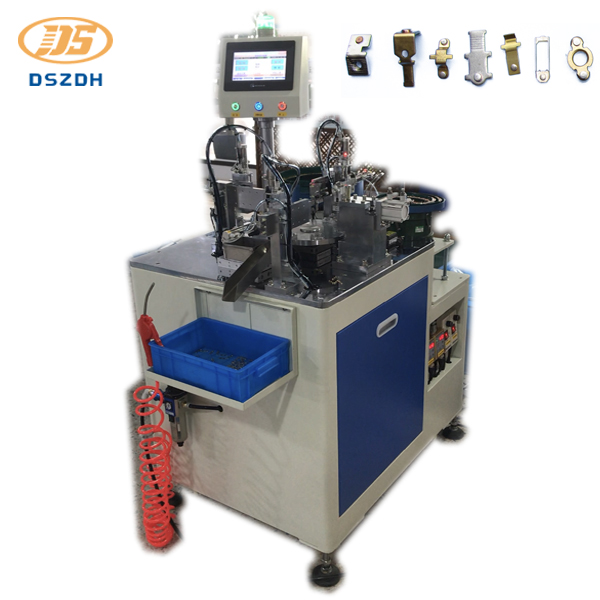
As someone who has spent two decades in the manufacturing sector, I have witnessed firsthand the evolution of assembly line technology. The relentless pursuit of efficiency, precision, and cost-effectiveness is a daily reality. In this landscape, the Automatic Riveting Machine has emerged as a pivotal tool. I have personally seen companies, including our partners at Desheng, revolutionize their production lines by integrating this advanced technology. The shift from manual or semi-automated riveting to a fully automated system isn't just an upgrade it is a complete transformation of the assembly process.
Why Should Automotive Manufacturers Prioritize Precision and Consistency
In automotive assembly, a single weak rivet can compromise the safety and integrity of an entire vehicle. Human fatigue, variable pressure application, and visual misalignment are inherent risks in manual processes. An Automatic Riveting Machine eliminates these variables. How does it achieve this? Through programmable logic controllers and high-resolution servo motors, every single rivet is placed with micron-level accuracy and consistent force. This ensures that every chassis, door panel, or brake component has uniform structural integrity. For a brand like Desheng, which engineers its machines with precision as a core tenet, this means delivering equipment that builds reliability directly into your product.
How Do Automatic Riveting Machines Drive Down Operational Costs
Let's talk numbers, which is what ultimately sustains a business. While the initial investment in an Automatic Riveting Machine is significant, the long-term savings are substantial. Consider the following cost-saving parameters
-
Reduced Labor Costs One machine can often replace multiple operators, freeing them for higher-value tasks.
-
Minimized Rework and Scrap Unprecedented consistency drastically reduces costly errors and material waste.
-
Lower Energy Consumption Modern machines, like those from Desheng, are designed for energy efficiency, often featuring regenerative drives that recapture energy.
-
Decreased Downtime With robust construction and predictive maintenance alerts, these machines maximize uptime.
The following table illustrates a typical operational cost comparison
| Cost Factor | Manual Riveting | Automatic Riveting Machine |
|---|---|---|
| Labor (per shift) | 3 Operators | 0.5 Operator (Supervision) |
| Units Per Hour | 40 | 120 |
| Defect Rate | 2.5% | 0.1% |
| Direct Energy Cost | Low | Medium-Low |
What Key Features Should You Look For in a Riveting System
Not all automatic riveting systems are created equal. When evaluating a machine, you need to scrutinize its technical parameters. Here is a list of critical features based on my experience with high-performance models
-
Axial Force Capacity Ranging from 2 kN to 20 kN to handle everything from lightweight trim to heavy-duty structural components.
-
Control System A user-friendly PLC with a touchscreen HMI for easy programming and changeovers.
-
Feed System A vibratory bowl feeder capable of handling various rivet sizes and materials without jamming.
-
Cycle Time Capable of achieving cycles under 3 seconds for high-volume production environments.
-
Integration Seamless integration with existing PLCs and MES (Manufacturing Execution Systems) for data tracking.
A partner like Desheng excels by not only meeting these specifications but also offering custom-engineered solutions to fit unique assembly challenges, ensuring their Automatic Riveting Machine is a perfect fit for your line.
Can an Automatic Riveting Machine Truly Enhance Workplace Safety
Absolutely. The automotive workshop is filled with potential hazards. A traditional riveting hammer poses risks of repetitive strain injuries and impact accidents. By confining the riveting process within a safeguarded machine, you immediately create a safer work environment. Operators are removed from direct contact with the high-force operation, significantly reducing the risk of workplace incidents. This is a non-negotiable benefit that protects your most valuable asset your people.
Is Your Assembly Line Ready for the Future
The automotive industry is moving towards greater automation and connectivity, often termed Industry 4.0. Investing in an Automatic Riveting Machine today is an investment in your future competitiveness. These machines are the building blocks of a smart factory, capable of providing real-time production data and enabling predictive maintenance. The robustness and innovation built into a Desheng system ensure that you are not just solving today's pain points but are also prepared for tomorrow's demands. The question is no longer if you should automate your riveting process, but which partner you will choose to do it with.
We have seen how these machines solve real-world problems of quality, cost, and safety. If you are ready to explore how a precision Automatic Riveting Machine can transform your automotive assembly line, we are here to provide the expertise and technology. Do not hesitate to contact us today for a detailed consultation and let us demonstrate how we can address your specific needs. We look forward to your inquiry.